
Hormuz, Malacca, Panama: The Chokepoints Accelerating the Global Energy Transition

Updated: Jun 25
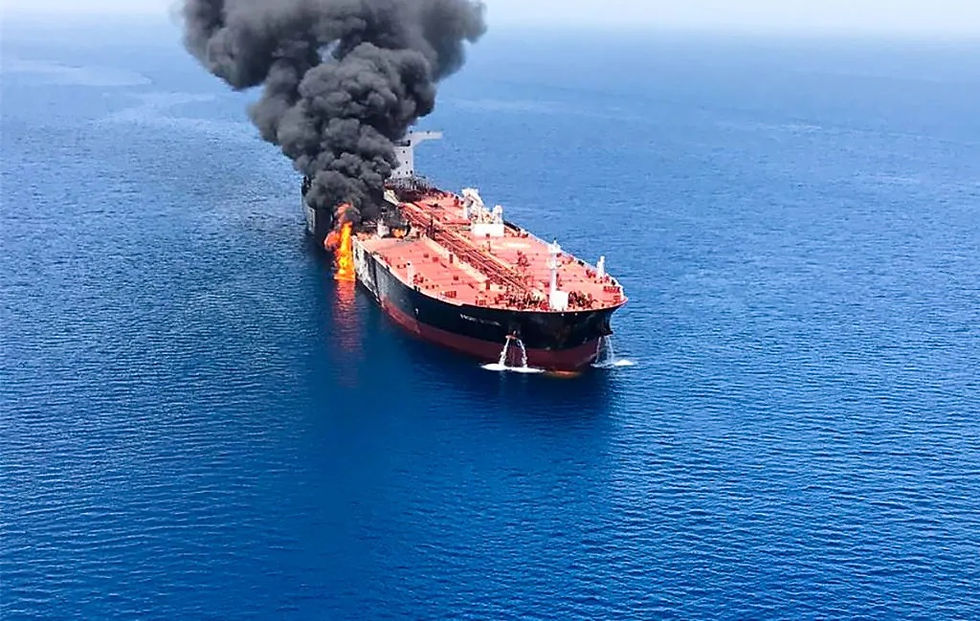
A Narrow Stretch of Water That Can Paralyse the World Economy
At its narrowest point, the Strait of Hormuz is just 33 kilometres wide, yet in the first half of 2025, it carried 20.9 million barrels of oil and petroleum products per day, roughly 20% of global petroleum liquids consumption.
A few hundred kilometres away, the Strait of Malacca handled an even larger 23.2 million barrels per day, nearly 29% of all seaborne oil trade. Meanwhile, the Panama Canal handles about 5% of global maritime trade and serves as a critical shortcut for container ships, LNG carriers, and bulk commodities.
These three chokepoints illustrate global resilience to chokepoints — or the lack thereof. When tensions flare in Hormuz (as they did dramatically in early 2026 with production shut-ins reaching 9.1 million barrels per day in April), when droughts slow Panama, or when piracy and great-power rivalry threaten Malacca, the shockwaves hit supply chains, energy prices, and corporate balance sheets simultaneously.
The 2026 Hormuz crisis is not an isolated event. It is the latest reminder that reliance on vulnerable maritime corridors is a structural risk in today’s interconnected world.
The good news? Repeated disruptions are catalysing a profound and lasting shift: faster investment in renewables, small modular reactors (SMRs), hydrogen, battery storage, and frontier technologies that promise true energy independence and resilience.
This article examines the three chokepoints, the accelerating energy transition they are triggering, and the practical corporate strategies and technological opportunities emerging for businesses seeking to thrive in a more volatile world.
Anatomy of the Chokepoints: Accelerating the Global Energy
The Strait of Hormuz remains the most explosive flashpoint. In the first half of 2025, it moved 20.9 million barrels per day. The 2026 crisis forced Gulf producers to shut in millions of barrels of oil daily and sent tanker rates to multi-decade highs, with flows plunging at times.
The Strait of Malacca is the world’s busiest oil chokepoint in volume terms. At 23.2 million barrels per day, it dwarfs the Strait of Hormuz in sheer throughput and is vital to East Asian economies, including China, Japan, and South Korea. Any sustained disruption here would immediately spike Asian energy costs and ripple into global manufacturing supply chains.
The Panama Canal is different but equally consequential. Drought-induced restrictions have repeatedly forced rerouting around Cape Horn, adding thousands of nautical miles and weeks of delay to Asia–U.S. East Coast trade. While less oil-focused, it affects LNG, chemicals, and consumer goods — sectors deeply intertwined with energy markets.
These corridors are not interchangeable backups. A crisis in one forces costly detours that strain the others, creating cascading effects across global trade and energy systems. The interconnected nature means that vulnerability in any single chokepoint amplifies risks everywhere.

How Repeated Disruptions Are Supercharging the Energy Transition
Every major chokepoint shock in recent years has had the same effect: it exposes fossil-fuel dependence and makes low-carbon alternatives suddenly more attractive and economically urgent.
Renewables surge as insurance
After the 2022 Russian gas cutoff and the 2026 disruptions in the Strait of Hormuz, European and Asian governments and corporations accelerated solar, wind, and storage deployments at unprecedented speed. The logic is simple and compelling: domestically generated renewable power cannot be blockaded by naval tensions or disrupted by distant conflicts.
Small Modular Reactors (SMRs) gain momentum
SMRs offer factory-built, scalable nuclear power that can be deployed near demand centres with significantly shorter construction times than traditional plants.
The European Commission’s 2026 strategy projects 17–53 GW of SMR capacity in the EU by 2050, driven explicitly by energy security concerns following repeated supply shocks. In the U.S. and parts of Asia, similar policy tailwinds are emerging as utilities seek firm, dispatchable power to complement intermittent renewables and reduce exposure to imported fuels.
Hydrogen and battery storage become strategic assets
Green hydrogen projects, once considered niche or too expensive, are now being fast-tracked for industrial decarbonization and long-duration storage. Battery storage deployments are hitting record growth rates as grids seek resilience against imported fuel shocks and sudden price spikes.
The pattern is clear and urgent: each Hormuz-style crisis dramatically compresses investment timelines. What might have taken a decade under normal conditions is now happening in 3–5 years because the cost of inaction — volatile prices, supply shortages, and lost competitiveness — has become too high for both nations and corporations to ignore.
“Countries can enhance their resilience by reducing exposure to chokepoints altogether through electrification, energy efficiency, grid development, energy storage, and clean energy.” — Storebrand Asset Management analysis of the 2026 crisis
Corporate Strategies for Hedging Energy Volatility
Forward-looking companies are no longer treating energy price spikes as temporary blips. They are embedding global chokepoint resilience into the core strategy with concrete actions.
Diversification and “friend-shoring.” Major manufacturers are building regional production hubs and dual-sourcing critical inputs. Oil majors and utilities are signing long-term offtake agreements for renewable and hydrogen projects in politically stable regions.
Financial hedging evolves. Traditional futures contracts are being supplemented with weather derivatives, geopolitical risk insurance, and even blockchain-based commodity tokens. Some corporations are exploring corporate power purchase agreements (PPAs) tied directly to SMR or green hydrogen projects for price certainty.
Scenario planning and AI-driven risk intelligence. Leading firms now run quarterly “chokepoint stress tests.” AI tools scan satellite data, shipping patterns, and social media for early warning signs of disruptions in the Strait of Hormuz, the Strait of Malacca, or the Strait of Panama.
Inventory and storage as a competitive advantage. The shift from “just-in-time” to “just-in-case” includes strategic stockpiles of critical minerals, fuels, and even finished goods near end markets.
“Geopolitical disruption is now structural, not cyclical. Antifragile organizations use volatility to become stronger.” — Morgan Stanley Research, 2026
Frontier Tech Opportunities in Alternative Fuels
This transition is creating massive opportunities for frontier technologies
Advanced nuclear (SMRs and beyond): Factory fabrication and modular design slash costs and timelines. Data centres, remote industrial sites, and military bases are early adopters seeking always-on power immune to sea-lane risks.
Green hydrogen and derivatives: Ammonia as a shipping fuel and long-haul transport vector is gaining traction. Projects that pair solar/wind with electrolysers in stable regions are attracting billions in investment.
Next-generation battery storage: Long-duration technologies (flow batteries, iron-air, sodium-ion) are scaling to handle multi-day grid resilience, reducing reliance on imported fuels during chokepoint crises.
AI-optimised energy systems: Predictive analytics now forecast chokepoint risks and optimise renewable dispatch, storage charging, and hydrogen production in real time.
These technologies are not just “green” — they are strategic hedges against volatility. Companies that master them gain cost predictability, regulatory goodwill, and lasting competitive moats in an uncertain world.
“Energy security is at the core of national security — and increasingly of corporate competitiveness.” - Xi Jinping, 2025
Africa’s Unique Position
Africa offers a compelling case study. Nations like Uganda and Kenya, heavily dependent on imported fuels via vulnerable maritime routes, face acute pain from every spike in the price of crude from the Hormuz region — higher fuel costs, increased inflation, and reduced consumer purchasing power. Yet this also creates opportunity: leapfrogging to distributed renewables, mini-grids, and SMR micro-reactors could deliver energy sovereignty faster than traditional infrastructure ever could.
East African nations are already piloting green hydrogen hubs and solar-plus-storage projects. In Kenya, the government is advancing its Green Hydrogen Strategy and Roadmap through partnerships with the Global Green Growth Institute and the European Investment Bank, including the exploration of hydrogen power plants and the development of enabling frameworks for domestic use and potential exports. The country has hosted regional symposia and is positioning itself as a leader in East Africa’s hydrogen economy.
In the broader East African Community, the Promotion of Green Hydrogen in East Africa Project (led by the East African Centre of Excellence for Renewable Energy and Efficiency – EACREEE) has been running since 2025. It focuses on framework development, baseline studies, consultation workshops, and the Eastern Africa Regional Green Hydrogen Symposium held in Nairobi.
On the solar-plus-storage side, solar-plus-battery energy storage systems (BESS) are gaining traction across East Africa for both utility-scale and commercial & industrial applications. Projects are delivering reliable power at competitive costs (e.g., some solar-plus-storage solutions in Africa now achieving around 7 cents per kWh in certain contexts), replacing expensive diesel generation and improving resilience against fuel import shocks.
The same chokepoint shocks that hurt importers are accelerating domestic clean-tech adoption — a pattern likely to repeat across the Global South, where energy security and economic development are tightly linked.
For import-dependent economies like Uganda and Kenya, every spike in global oil prices due to Hormuz-style disruptions raises fuel costs, inflation, and strains on public finances, making locally generated solar, storage, and green hydrogen increasingly attractive for energy sovereignty and industrial growth.

The Road Ahead: Resilience as the New Competitive Edge
The era of cheap, reliable fossil fuels flowing through narrow maritime corridors is ending. Repeated chokepoint crises are not anomalies. They are defining features of a multipolar world where geopolitical risk is no longer episodic but constant.
From the Strait of Hormuz to the Strait of Malacca and the Panama Canal, the vulnerabilities exposed are structural. Energy security, supply chains, and global trade are now deeply intertwined and increasingly fragile.
For businesses, resilience is no longer a defensive posture. It is a competitive strategy. Organisations that embed chokepoint resilience into their core operations—investing in renewables, small modular reactors, hydrogen, battery storage, and AI-driven risk intelligence—will emerge stronger, more agile, and better positioned for long-term growth. Those that cling to legacy models will face recurring shocks, rising costs, and eroding market share.
For investors and frontier technology innovators, the signal is unmistakable. The next decade’s defining opportunities lie in systems that decouple growth from vulnerable geography—technologies that make energy more abundant, more flexible, and less exposed to geopolitical disruption.
Waiting for stability is no longer a viable strategy. The new advantage belongs to those who anticipate volatility, diversify aggressively, and build systems designed to adapt under pressure.
The chokepoints may be narrow, but their impact is global. Those who act early will not only withstand the next disruption—they will help define the structure of the world that emerges from it.
Editorial Note
This analysis forms part of Frontier Tech Network’s ongoing coverage of global power shifts, energy systems, and emerging geopolitical risk. As these forces continue to unfold, follow our deeper examination of how the 40-Day Iran War is reshaping the global order in After Hormuz: How a 40-Day War Revealed the Systemic Limits of American Power.



Comments