
Pope Leo Warns of AI Risks: Safeguarding Human Dignity in the AI Age

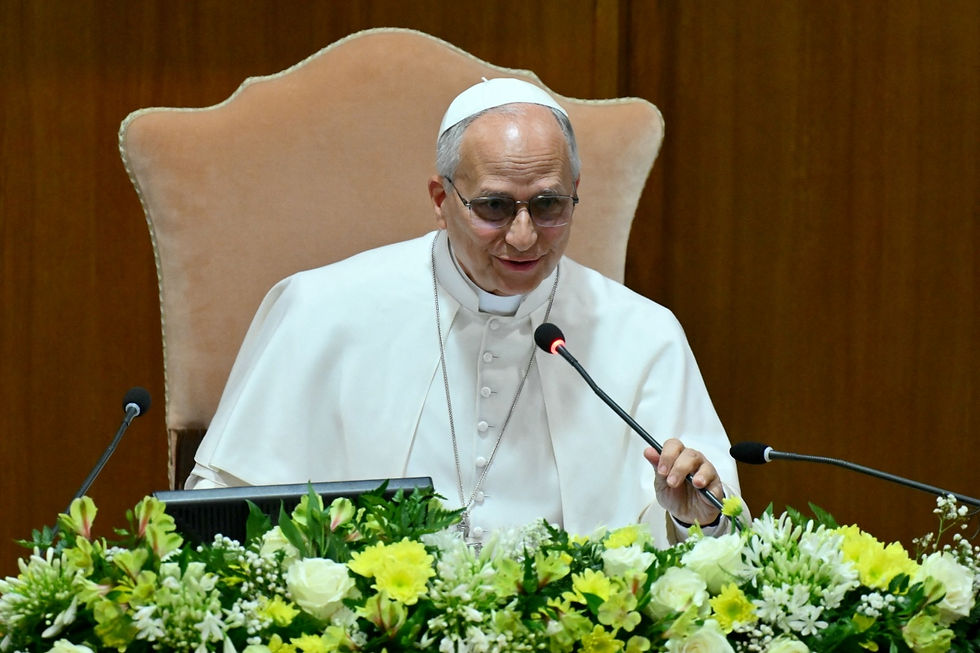
For the first time in history, a Pope is asking humanity to slow down one of its most powerful technologies while much of the world races to accelerate it.
Artificial intelligence has rapidly moved from research laboratories into nearly every layer of modern life. It writes text, generates images, assists medical diagnostics, predicts behaviour, accelerates scientific discovery, and increasingly influences how people encounter information itself.
Governments now view it as strategic infrastructure, technology firms treat it as the engine of the next industrial revolution, and investors proudly speak about it with the same strategic importance once reserved for oil, electricity, and the internet.
Yet as nations compete for chips, computing power, talent, and dominance in the emerging AI economy, a different voice has entered the conversation.
In May 2026, Pope Leo XIV released Magnifica Humanitas, his first major encyclical, presenting artificial intelligence not simply as a technological breakthrough but as one of the defining moral challenges of the modern era.
His intervention arrived at a moment when enthusiasm around AI remains extraordinarily high while concerns over labour disruption, surveillance systems, autonomous weapons, misinformation, and digital inequality continue to grow.
His warning carried unusual weight because it did not reject technology itself. Instead, it questioned the direction in which technology is moving and the incentives increasingly shaping it.
“Artificial intelligence now demands to be disarmed, freed from logics that turn it into an instrument of domination, exclusion, and death.” — Pope Leo XIV
The statement immediately expanded the AI conversation beyond engineers, regulators, and technology companies. Artificial intelligence was no longer being discussed solely as an economic opportunity or geopolitical race. It had entered the realms of ethics, theology, human dignity, and civilisation itself.
The timing is significant. FTN previously explored the speed of this transformation in Where AI Will Be in 1, 2, or 3 Years: The Future of Our Civilization, which examined how rapidly advancing models may reshape labour, modern infrastructure, governance, education, and human life.

Pope Leo’s intervention now introduces another question to that future: can humanity govern intelligence before intelligence begins reshaping humanity?
Pope Leo Warns of AI Risks as Artificial Intelligence Reshapes Society
The Vatican does not react to technology suddenly; historical Catholic social teaching has consistently anticipated and engaged major transformations before their full impact is felt.
During the industrialisation era, Pope Leo XIII issued Rerum Novarum in 1891 to address worker exploitation and social inequality as factories transformed economies and societies.
Later pontiffs confronted nuclear weapons, environmental degradation, globalisation, biotechnology, and digital ethics as each technological era presented new moral questions.
Artificial intelligence now joins that lineage.
Pope Leo XIV builds upon earlier concerns repeatedly raised by Pope Francis, who warned that technology detached from ethics risks reducing people into systems, metrics, and economic variables.
Magnifica Humanitas extends that concern into the AI era by presenting artificial intelligence not merely as software but as a force capable of reshaping labour markets, education, governance, warfare, economics, relationships, and even the structure of human interaction itself.
The concern lies in the incentives increasingly surrounding it.
Competition. Dominance. Acceleration. Optimisation without reflection.
The Vatican argues that technological progress detached from ethical responsibility risks producing systems humanity struggles to control.
One of Pope Leo’s strongest warnings concerns concentration of power within the digital economy.
“Today, among the goods universally destined for all, we must also include patents, algorithms, digital platforms, technological infrastructures, and data. When these become concentrated in the hands of a few without adequate sharing and access, a new divide emerges between those who participate in the digital revolution and those left on its margins.” — Pope Leo XIV
The statement reflects a growing concern extending far beyond theology.
Who owns intelligence?
Who controls access?
Who benefits?
Who remains excluded?
These questions profoundly define the AI era.
FTN examined this deeper transformation in Why AI Just Replaced Oil as a Strategic Resource on Earth, arguing that intelligence itself is emerging as a strategic resource comparable to the energy systems that shaped earlier eras of economic power, geopolitical influence, and industrial growth.
Nations now compete for critical earth minerals, nuclear energy, and computing infrastructure with the intensity once associated with pipelines, oil reserves, and industrial power.
The competition is going global.
The United States leads frontier model developments through private technology giants. China is advancing rapidly through coordinated state investment and industrial integration. Europe is positioning itself as the regulatory centre, emphasising governance and oversight.
Pope Leo introduces another dimension.
Human dignity.
From Industrial Revolution to Algorithmic Civilisation
History suggests that technological revolutions rarely arrive without disruption.
Industrialisation expanded productivity while exposing workers to exploitation before labour protections emerged. Electricity transformed economies while creating inequalities around access and development. Nuclear technology unlocked extraordinary power while forcing humanity to confront existential risks.
Artificial intelligence may present a similar turning point.
Unlike earlier technologies, however, AI affects nearly every sector simultaneously. It touches economics, education, communication, creativity, labour, security, finance, medicine, and information ecosystems all at once.
Transitions that once unfolded across generations now occur in weeks or months.
Large language models moved from experimental systems into global products with extraordinary speed. Generative AI now influences writers, journalists, programmers, artists, educators, researchers, and entire industries simultaneously.
Our Editorial examined this acceleration in The AI Cold War Has Already Begun: Why AI Is Free, arguing that artificial intelligence resembles geopolitical competition rather than ordinary innovation.
No state wants technological dependence.
No company wants slower deployment.
No military wants strategic disadvantage.
Pope Leo effectively questions that logic.
Disarming AI does not mean abandoning technology.
It means resisting incentives that transform intelligence into domination.
Deepfakes, Surveillance, and the New Crisis of Trust
Artificial intelligence is not only changing productivity.
It is changing truth itself.
Deepfakes now generate realistic audio, video, and imagery capable of simulating public figures and events with remarkable realism. Synthetic media increasingly blurs distinctions between authentic and artificial content, creating new pressures on journalism, democracy, public trust, and information systems.
According to UNESCO Artificial Intelligence Ethics Resources, generative AI raises growing concerns around authenticity, misinformation, bias, and information integrity.
AI today powers systems capable of analysing movement, facial patterns, behavioural activity, and digital interactions at enormous scale. Public safety applications coexist alongside difficult questions concerning privacy, consent, autonomy, and freedom.

Pope Leo warns of AI risks partly because these technologies influence more than efficiency.
They influence agency.
The encyclical affirms the principle that technology should assist human life rather than reorganise it entirely.
His concern extends directly into governance.
“In decisions concerning economic flows, digital platforms, data management, and algorithms, we cannot allow a few actors alone to steer these processes. It is necessary to build cooperation that respects the global community and makes all participants co-responsible for the common good.” — Pope Leo XIV
This argument increasingly resonates within global regulatory debates.
FTN examined this rivalry in Who Controls AI Controls the Future: Inside the Global Race to Regulate Artificial Intelligence, exploring how compute power, ethics, data, governance and the invisible infrastructure have themselves become strategic competition.
Control now extends beyond hardware.
It includes narratives and information warfare.
Institutions.
Regulation.
Values.
Labour, Automation, and New Forms of Digital Dependency
Among the strongest themes within Magnifica Humanitas is labour.
Catholic social teaching has historically viewed work as more than economics. Work shapes dignity, purpose, family life, identity, and social participation.
Artificial intelligence now challenges that relationship.
According to the IMF report on AI and the future of work, roughly 40 per cent of jobs globally could experience exposure to AI transformation.
The effects will not be uniform.
Speaking at the Stanford Leadership Forum, Citadel founder and CEO Ken Griffin recently detailed a striking shift in AI capabilities that has fundamentally upended workflows at his elite hedge fund.
Griffin, who was previously highly sceptical of the technology, admitted that "agentic AI"—systems capable of independently executing complex, multi-step workflows—has advanced so rapidly over the last several months.
The Step-Change: Hours vs. Months
At an institution like Citadel, quantitative research and financial modelling have historically been the domain of teams of highly trained analysts, often holding master’s degrees and PhDs in mathematics, physics, or economics.
A typical high-level project—such as extracting vast datasets, stress-testing complex economic assumptions, and building predictive models—traditionally required weeks or months of intensive human labour.
Today, agentic AI tools within Citadel's operations are collapsing that exact timeline, completing these extraordinarily high-skilled analytical tasks in a matter of hours or days.
"To be blunt, work that we would usually do with people with master's and PhDs in finance over the course of weeks or months [is now] being done by AI agents over the course of hours or days." — Ken Griffin, CEO of Citadel
What makes Griffin’s observation distinct is the target demographic. This is no longer just about routine work facing standard automation pressure; it is the direct displacement of elite cognitive labour —the elite professionals.
As Elon Musk highlighted Griffin's remarks online, it ignited a fierce debate on where this trajectory leads over the next 12 to 36 months. This shift mirrors what is already unfolding in creative industries, where generative models continuously compress the time and cost required to produce text, imagery, code, music, and full-scale video.
Witnessing this high-skill work being automated within his own operations left Griffin "fairly depressed" regarding the broader societal implications.
Historically, Catholic social teaching has anticipated major societal transformations long before their consequences fully unfolded. Pope Leo XIII’s foundational warning about “new forms of slavery” speaks profoundly to this current technological reality.
Modern technology may not physically restrain people, but unchecked systems will.
Algorithmic management, behavioural optimisation, digital dependence, relentless data extraction, and extreme economic concentration are quietly creating subtler, more pervasive forms of control.
From Replacement to Relationship
The ultimate concern shifts from mere replacement toward relationship. The core challenges of the next three years centre on deep structural and moral questions:
Coexistence: How should humanity coexist with an intelligence it created?
Equity: How should these unprecedented productivity gains be distributed?
Access: Who benefits from this step-change, and who remains permanently excluded?
The rapidly closing gap between human expertise and algorithmic execution is forcing an uncomfortable timeline on global systems.
Elite finance, creative industries, and the broader global landscape are no longer just managing a shift in labour economics—they are auditing the very future of human agency and dignity.
Europe Regulates While Others Accelerate
Regional comparisons reveal sharply different approaches to artificial intelligence governance. Europe has generally chosen caution, building regulatory systems that prioritise accountability, transparency, and human oversight even if that means slower deployment.
The clearest example is the European Union’s AI Act, one of the world’s first comprehensive AI laws. The legislation classifies AI systems according to risk levels, placing strict controls on applications considered harmful or high risk.
Systems linked to social scoring, manipulative behaviour, and certain forms of biometric surveillance face restrictions, while high-risk sectors such as healthcare, education, employment, law enforcement, and critical infrastructure must meet transparency and safety requirements before deployment.
Europe has also pushed technology firms toward clearer disclosure rules, requiring transparency around AI-generated content and stronger obligations for advanced foundation models. The philosophy behind these measures reflects a broader European approach: innovation should move forward, but not faster than governance.
Elsewhere, the United States continues to prioritise innovation leadership through private technology ecosystems, investment, and frontier model development, while China integrates artificial intelligence through state coordination and strategic deployment across industry, security, and digital infrastructure.
These approaches reveal different philosophies. Europe often asks what AI should be allowed to do and under what safeguards, while many innovation ecosystems focus more on what AI can achieve and how quickly it can scale.
Pope Leo introduces a different question altogether.
What should humanity become in the age of intelligent machines?
This distinction matters because artificial intelligence no longer affects technology alone. It increasingly shapes education, culture, politics, economics, relationships, and social organisation simultaneously.
Magnifica Humanitas therefore argues that AI cannot be left entirely to market forces or geopolitical competition.
International cooperation is necessary because the consequences of these technologies cross borders and affect societies far beyond the countries building them.
Healthcare Shows the Hope Within AI
Despite its warnings, Magnifica Humanitas is not pessimistic about artificial intelligence. Pope Leo acknowledges that AI carries extraordinary potential when guided by ethics and used in service of humanity, and healthcare offers one of the clearest examples of that promise.
Artificial intelligence is already helping doctors improve diagnostics, strengthen predictive medicine, analyse medical images, accelerate biological research, and support drug discovery. Machine learning systems are increasingly assisting researchers in processing complex datasets while hospitals use AI tools to support clinical decisions, treatment planning, and early disease detection. In regions facing shortages of medical professionals, these technologies may also help expand access to healthcare services and improve efficiency.
The World Health Organization recognizes this potential while simultaneously urging ethical safeguards around privacy, fairness, accountability, and human oversight through its guidance on Ethics and Governance of AI for Health.
This balance reflects the wider AI debate. The same systems capable of improving healthcare outcomes could also enable surveillance under different incentives, while the intelligence accelerating scientific discovery could equally deepen inequality if access remains concentrated among a few actors.
Technology itself does not determine outcomes. Human institutions, policies, and values ultimately shape whether innovation serves the common good or reinforces existing divisions.
This principle sits at the centre of Pope Leo’s intervention.
Learning When Not to Use AI
Perhaps the most unusual aspect of Magnifica Humanitas concerns education and human judgment. Modern societies usually emphasise technological adoption by teaching people how to use new tools more efficiently. The Vatican introduces another idea altogether: discernment.
The encyclical argues that humanity must learn not only how to use artificial intelligence but also when not to use it. The idea appears simple, yet its implications extend deeply into education, relationships, culture, and human development.
Relationships, teaching, caregiving, moral judgment, spiritual life, and personal reflection derive meaning partly because people remain present within them. While automation may increase efficiency and convenience, excessive dependence on intelligent systems risks weakening attention, agency, critical thinking, and human connection.
Pope Leo frames this vision clearly:
“A just social order in the digital era guarantees equal access to opportunity, protects the vulnerable, opposes hatred and disinformation, and places data and technology under public oversight so that profit never outweighs human dignity and the good of peoples.” — Pope Leo XIV
This argument ultimately forms the heart of the encyclical. Artificial intelligence is not merely a discussion about machines or software. It is a discussion about people, values, and the kind of society humanity hopes to build.
The Civilization Question
Artificial intelligence resembles earlier transformative forces such as industrialisation, electricity, oil, and nuclear technology. Like those systems before it, AI promises extraordinary capability while simultaneously introducing risks that demand restraint, reflection, and ethical guidance.
Pope Leo's warning is not that technology itself is dangerous. Rather, it is that intelligence without ethical direction risks becoming power without restraint.
The world today is moving rapidly to build smarter systems, yet the deeper question may be whether civilisation is becoming wiser at the same pace. That question sits at the centre of Magnifica Humanitas, and it may ultimately prove more important than the technology itself.
About the Author

Tinka C. Muhwezi is a media strategist, commentator, and founder of FTN, with over 25 years of experience in journalism, broadcasting, documentary storytelling, and digital media strategy. His work examines the deeper forces shaping global power, technology, energy, international affairs, and the headlines influencing public discourse.


Comments