
Strait of Hormuz Crisis: War and the New World Order

Updated: May 4

A Chokepoint That is Changing the World
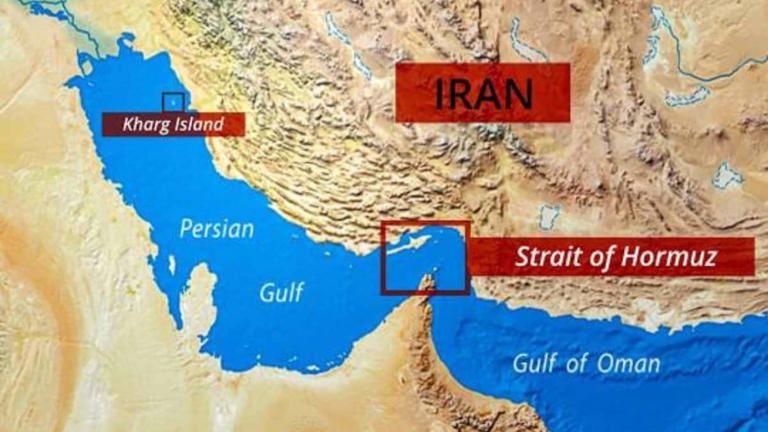
At the narrow entrance of the Persian Gulf lies one of the most consequential arteries of the global economy: the Strait of Hormuz. At its tightest point, the channel is only about 33 kilometers wide, yet it carries nearly one fifth of the world’s oil supply, according to the U.S. Energy Information Administration. Each day, roughly 20 million barrels of crude pass through its waters, feeding the industrial engines of Asia, Europe, and beyond.
This fragile corridor has become the focal point of rising tensions between the United States and Iran. Military posturing, sanctions, and retaliatory threats have elevated the possibility of disruption from hypothetical to plausible. Yet the stakes extend far beyond the Gulf. What unfolds in Hormuz is inseparable from a broader transformation in global power, a shift already visible in After Hormuz: How a 40-Day War Revealed the Systemic Limits of American Power.
The crisis is no longer just about oil. It is about who controls the flows of energy, the rules of trade, and ultimately the architecture of the international system.
The Strait of Hormuz Crisis and Global Power Shift
The Strait of Hormuz crisis sits at the intersection of energy security and geopolitical rivalry. For decades, the United States has maintained naval dominance in the region, ensuring the free flow of oil as a pillar of global stability. Today, that dominance is increasingly contested.
Think tanks such as the Council on Foreign Relations have highlighted how interconnected conflicts now define geopolitics. The war in Ukraine, tensions in the Middle East, and disputes in Asia are not isolated events. They form a network of strategic pressure points.
Europe’s rapid shift away from Russian gas after 2022 illustrates this dynamic. Imports of pipeline gas from Russia dropped by more than 80 percent between 2021 and 2023, according to the International Energy Agency. This forced a reconfiguration of global energy flows, with the United States and Qatar stepping in as alternative suppliers.
Now, the Strait of Hormuz presents a new vulnerability. Any disruption would reverberate across continents, amplifying inflation, destabilizing currencies, and straining political systems.
“Control of energy routes is control of geopolitical leverage.” — Henry Kissinger
Proxy Wars and the Shadow Target: China
Modern conflict rarely takes the form of direct confrontation between major powers. Instead, it manifests through proxy wars, where regional actors become conduits for broader strategic competition.
The conflict in Ukraine has often been framed as a clash between NATO-aligned interests and Russia. In the Middle East, tensions involving Iran carry implications that extend to its partnerships with Russia and China.
China’s role is particularly significant. As the world’s largest importer of crude oil, it depends heavily on supplies from the Gulf. Data from the BP Statistical Review indicates that China imports over 10 million barrels per day, a substantial portion of which transits through Hormuz.
A blockade or sustained disruption would therefore hit China’s economy at its core. Manufacturing output, export capacity, and domestic stability are all tied to reliable energy access.
“Energy security is at the core of national security.” — Xi Jinping
This reality has led some analysts to argue that crises in energy corridors indirectly constrain China’s rise, even when it is not a direct participant in the conflict.
BRICS and the Fracturing of Dollar Dominance
Parallel to these tensions is the steady rise of BRICS as a counterweight to Western economic structures. Initially composed of Brazil, Russia, India, China, and South Africa, the bloc has expanded its influence and ambitions.
Collectively, BRICS countries account for more than 40 percent of the global population and roughly 35 percent of global GDP in purchasing power terms, surpassing the G7, according to the International Monetary Fund.
One of the bloc’s most significant initiatives is the push to reduce reliance on the US dollar. Discussions around conducting oil trade in yuan, rupees, or other currencies have gained momentum, particularly among energy exporters seeking diversification.
The Strait of Hormuz crisis accelerates this conversation. If dollar-based trade becomes vulnerable to geopolitical disruption, alternative systems become more attractive.
“The dollar’s dominance rests on trust and power. Both are being tested.” — Ray Dalio
Energy Markets on Edge
The immediate economic impact of a Hormuz disruption would be severe. Analysts at the Goldman Sachs have warned that oil prices could surge beyond 150 dollars per barrel under a sustained blockade scenario.
Shipping costs would rise sharply as insurers price in heightened risk. Tanker routes might be rerouted around the Cape of Good Hope, adding time and expense. Supply shortages would ripple through industries, from transportation to agriculture.
Countries heavily dependent on imports would face acute pressure. India, for instance, imports more than 85 percent of its crude oil. A price spike would strain public finances and widen trade deficits.
In Africa, the effects would be indirect but deeply felt. Nations like Uganda would experience higher fuel costs, increased inflation, and reduced consumer purchasing power.
Business Strategy in an Era of Geopolitical Risk
For businesses, the Strait of Hormuz crisis underscores a fundamental shift in strategy. Efficiency alone is no longer sufficient. Resilience has become the new priority.
Global supply chains are being reconfigured to reduce dependence on single routes or regions. Companies are diversifying suppliers, investing in regional manufacturing hubs, and increasing inventory buffers.
The shift from “just in time” to “just in case” reflects a broader recognition that geopolitical risk is now a constant variable.
Financial strategies are also evolving. Firms are hedging against currency volatility and exploring alternatives to dollar-based transactions, particularly as BRICS initiatives gain traction.
Technology and data analytics play a growing role in anticipating disruptions, allowing companies to respond more quickly to emerging threats.
The United States and the Question of Decline
The notion that the United States is in decline is widely debated. It remains the world’s largest economy in nominal terms and possesses unmatched military capabilities. Yet its relative dominance is being challenged.
Public debt has exceeded 39 trillion dollars, according to the U.S. Treasury. Political polarization and shifting alliances add to the complexity of its global role.
However, decline does not mean disappearance. The United States continues to lead in innovation, finance, and global influence. What is changing is the distribution of power.
The emerging reality is one of multipolarity, where influence is shared among several major players rather than concentrated in a single superpower.
China’s Ascent in a Fragmenting World
China’s rise is one of the defining features of the modern era. It has become the largest trading partner for more than 120 countries, according to the World Bank.
Its Belt and Road Initiative seeks to secure trade routes and expand economic influence across Asia, Africa, and Europe. Yet this ascent is not without resistance.
Trade disputes, technological restrictions, and geopolitical tensions all shape the environment in which China operates. The Strait of Hormuz crisis adds another layer of complexity, highlighting vulnerabilities in energy supply chains.
For China, the challenge is not only growth but also security. Ensuring stable access to resources will be critical to sustaining its trajectory.
Regional Flashpoints: A Connected Global Conflict
To understand the current moment, it is essential to view regional conflicts as interconnected.
In Eastern Europe for example, the Ukraine war has reshaped alliances and energy flows. In the Middle East, the Hormuz crisis threatens global oil supply. In the Indo Pacific, tensions in the South China Sea reflect strategic rivalry between major powers.
Each of these regions represents a different dimension of the same overarching struggle. Together, they form a complex web of competition that defines the emerging world order.
The Human Cost Behind Power Politics
Behind the strategic calculations lie human consequences. Conflicts disrupt lives, displace populations, and strain economies.
The United Nations estimates that more than 100 million people have been forcibly displaced worldwide. Energy shocks exacerbate these challenges by increasing the cost of living, particularly in developing countries.
For households already facing economic pressure, rising fuel and food prices can push them further into poverty. The Strait of Hormuz crisis, therefore, is not just a geopolitical issue. It is a humanitarian one.
So what does the future hold in a new world order?
The Strait of Hormuz crisis offers a glimpse into the future of global politics. Several trends are likely to define the coming years.
Multipolarity will continue to deepen, with blocs like BRICS playing a larger role in shaping economic and political norms. Energy diversification will accelerate as countries seek to reduce reliance on vulnerable chokepoints.
Globalization may become more fragmented, with trade increasingly aligned along political and strategic lines. For businesses, adaptability and resilience will be essential.
For nations, the challenge will be balancing competition with cooperation in a world where stability can no longer be taken for granted.
As the Strait of Hormuz crisis continues to unfold, the implications stretch far beyond the Gulf, touching energy markets, global alliances, and the future balance of power. This is not a moment that will pass quietly. It is one that will define the direction of geopolitics in the years ahead.
At Frontier Tech Network, we are committed to going beyond the headlines. Under the leadership of Prof. Tinka C. Muhwezi and our media team, we will continue to track, analyze, and unpack the deeper forces shaping this evolving global order.
Because what appears on the surface as conflict or disruption is often only the visible layer of a much larger system. Beneath it, quieter mechanisms are already adjusting in real time. As explored in The Cost of Risk and How Maritime Insurance Is Rewriting Global Trade Routes, global trade does not wait for war to be declared or resolved. It reacts to risk itself. Insurance premiums rise, routes shift, and entire flows of energy and goods are redirected long before a single chokepoint is fully closed.
The story is still being written.
In the days to come, FTN will bring you sharper insights into proxy conflicts, the rise of BRICS, and the strategic moves redefining power between the United States, China, and emerging global players.
Stay with us. The world is shifting, and we are just getting started.



Comments