
The AI Economy: Why Compute is the New Global Reserve

Updated: May 4
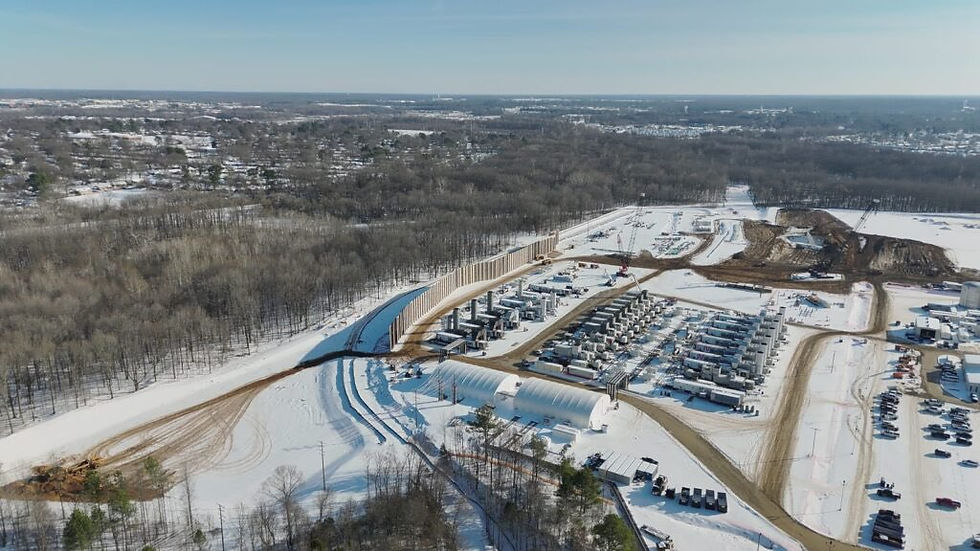
For generations, the pulse of human civilization was measured in barrels of Brent Crude and the rhythmic chugging of internal combustion engines. Global power was a game of geography and extraction, dictated by who held the keys to the physical pipelines and maritime straits of the earth.
The "Petrodollar" was not just a currency; it was a physical reality that bound the prosperity of nations to the chemistry of the earth. But as we cross the threshold of 2026, a tectonic shift has completed. The era of resource extraction has been superseded by the era of the AI economy. In this new landscape, Compute is the New Global Reserve that is defining metric of national survival.
While compute drives the economy, it relies on a physical backbone. See how the Invisible Infrastructure of satellites and sensors facilitates this real-time data flow.
The transition is absolute. Just as the 1970s oil shocks redefined the relationship between energy and economics, the current "silicon shocks" are redefining the relationship between intelligence and sovereignty.
We are no longer merely witnessing a technological trend; we are participating in the birth of a new economic architecture where FLOPS (Floating Point Operations Per Second) are the ultimate store of value.
The ability to process data at scale has moved from the backrooms of IT departments to the situation rooms of national governments.
The Historic Transition from Carbon to Silicon Sovereignty
To understand the magnitude of this shift, one must look at the historical precedent of the petrodollar system. For fifty years, the global economy was anchored by energy—if you wanted to participate in the international trade system, you needed dollars to buy the fuel that powered your factories. This created a specific type of geopolitical leverage where "resource-rich" nations could dictate terms to "resource-poor" nations regardless of their technological prowess.
Today, the factory has been replaced by the data center. The energy that matters most is no longer the fuel that moves a piston, but the electricity that flips a transistor.
According to the World Bank’s 2026 Global Economic Prospects, while traditional commodities like coal and oil have stabilized, investment in high-density compute infrastructure has become the primary driver of GDP resilience in every major economy. This is not a software revolution; it is a hardware-driven reorganization of the planet.

When a nation like the United Arab Emirates or Saudi Arabia pivots its trillion-dollar sovereign wealth funds toward Nvidia B200 clusters and H100 arrays, they are performing a strategic conversion.
They are transforming vanishing oil reserves into a permanent, "evergreen" reserve of computational power. They have realized that in a world where AI drives everything from drug discovery to high-frequency trading, a lack of compute is equivalent to a lack of oxygen.
"We are moving from an era of discovered power to an era of synthesized power. If you don't own the silicon, you don't own your future." — Dr. Elena Vance, Strategic Analyst at the Center for Global Silicon.

The Internal Mechanics of the AI Economy: Why Compute is the New Global Reserve
In the current geopolitical climate, the concept of The AI Economy: Why Compute is the New Global Reserve functions as both a shield and a sword. For a nation to be truly sovereign in 2026, it must possess "Computational Sovereignty." This is the ability to generate, process, and secure intelligence without being dependent on a foreign power for the underlying hardware or cloud architecture.
The United States has already weaponized this reality. Through the CHIPS and Science Act, the U.S. government has effectively created a "silicon curtain." By restricting the flow of high-end GPUs and extreme ultraviolet (EUV) lithography machines to adversaries, the U.S. is ensuring that the global reserve of intelligence remains denominated in Western-designed silicon.
This is the new sanctions regime. In the 20th century, you froze a country’s central bank accounts; in the 21st, you freeze their access to the clusters required to run their modern economy.
This creates a high barrier to entry. The "Compute Divide" is separating the world into two tiers: the "Compute-Rich," who can simulate the future, and the "Compute-Poor," who are forced to live in the reality created by others.
This gap is wider and more dangerous than any previous industrial divide because compute is recursive. More compute leads to better AI, which leads to better chip design, which leads to even more compute. The lead is not just maintaining; it is accelerating.
Fragmentation and the Four Spheres of Computational Influence
The race for silicon dominance has fractured the world into four distinct spheres, each attempting to navigate the complexities of The AI Economy: Why Compute is the New Global Reserve with a different playbook.
The United States: The Architectural Hegemon The American strategy is focused on the top of the stack. By controlling the IP of Nvidia, AMD, and the massive cloud hyperscalers like AWS and Azure, the U.S. acts as the "Central Bank of Compute." They don't need to manufacture every chip, provided they control the instructions the chips follow. This "Architectural Power" allows the U.S. to set global standards and monitor the computational "spending" of other nations.
China: The Vertical Integrator Faced with Western blockades, China has embarked on a project of total vertical integration. As outlined in the MIIT Technological Directives, Beijing is building a "National Compute Power Network." They are treating data centers like public utilities, moving compute power from the resource-rich West to the industrial East. Their goal is to build an entirely parallel ecosystem—one where the silicon, the energy, and the model weights are all domestic.
Europe: The Regulatory Gatekeeper Europe has opted for "Sovereign AI" built on transparency and ethics. Through the EU AI Act Official Text, Europe is betting that the world will eventually crave "Clean Compute." Just as the "Brussels Effect" regulated the internet, Europe hopes to regulate the AI economy by forcing transparency on how the "Global Reserve" is utilized.
The Global South: The Open Source Disruptors Nations in Africa and Southeast Asia are taking an asymmetric approach. Unable to build the multi-billion dollar foundries required for high-end silicon, they are focusing on "Frugal AI."
By utilizing open-source models like Llama or Mistral, they are attempting to maximize the intelligence output of lower-end, accessible hardware. They are the "shale oil" producers of the silicon world—finding ways to extract value where others see waste.
The Single Point of Failure in the Strait of Silicon
If compute is the new oil, then the Taiwan Strait is the new Strait of Hormuz. The sheer concentration of the global reserve in a single geographic location is a systemic vulnerability that keeps global planners awake at night. Over 90% of the world's most advanced logic chips are manufactured by TSMC in Taiwan.
In the oil era, if a single well was capped, others eventually ramped up. In the compute era, if the foundries in Hsinchu or Tainan go offline, the "brain" of the global economy stops.
As noted in the TSMC 2025 Annual Report, the complexity of a 2nm foundry is so high that it cannot be "rebuilt" elsewhere in a timeframe relevant to a crisis. This creates a "Zero-Day" vulnerability for every major technology company on earth. The world is addicted to a product that only one island can produce at scale.
"The compute divide is the new class struggle. There are nations that will write the code, and nations that will be written by it." — Marcus Thorne, 'The Silicon Frontier'.
Teraflops as the Metric of National Prosperity
Traditional metrics like GDP are increasingly failing to capture the true health of a modern economy. A more accurate metric for 2026 is National Intelligence Product (NIP)—the aggregate total of floating-point operations a country can perform in a given year.
This is because compute is now a direct input for every sector of the economy. In healthcare, compute allows for the simulation of protein folding, leading to drugs that used to take decades to develop being found in months. In finance, it enables high-frequency risk assessment that stabilizes markets. In agriculture, it optimizes crop yields through hyperspectral imaging analysis.
According to data from the Bank for International Settlements, AI-related investment has accounted for nearly 45% of U.S. GDP growth in the last six quarters.
Compute is not an "expense"; it is the capital equipment of the 21st century. Those who do not have a "Reserve" of it will find their traditional industries—from manufacturing to services—slowly cannibalized by more efficient, AI-driven competitors abroad.

The Environmental Paradox of the Intelligence Reserve
The transition to a compute-centric world brings a brutal irony: to power the "clean" intelligence of the future, we are putting immense strain on the physical environment. A single query to a generative AI model consumes significantly more electricity than a legacy search engine query.
This has led to a desperate scramble for energy, effectively linking the price of "intelligence" to the price of a kilowatt-hour.
This is why we are seeing a sudden revival of nuclear energy among tech giants. Microsoft, Google, and Amazon are no longer just software companies; they are becoming energy companies.
By investing in small modular reactors (SMRs), they are attempting to isolate their "Compute Reserve" from the volatility of the public grid. They have realized that the limit to the AI economy is not the number of GPUs you can buy, but the amount of heat you can dissipate and the amount of power you can draw.
The Human Stakes of the New Digital Reserve
As we move deeper into the 2020s, we must confront the social implications of a world denominated in compute. For the worker, "Compute-as-a-Service" means that their cognitive labor is now in direct competition with the global reserve. If a task can be performed by an algorithm for a fraction of a cent in compute costs, that task's market value for a human will inevitably drop.
This is creating a new kind of "Computational Class System." Those who have access to the highest-end compute can solve problems and create wealth at a rate that is physically impossible for those without it. This is not just about wealth inequality; it is about "Cognitive Inequality."
"We are essentially turning electricity into thought. The constraint isn't our imagination; the constraint is the grid." — Sarah Jenkins, Energy Transition Institute.
The Inevitable Integration of the Sovereign Rack
The transformation is complete. We have left the world of the ground and entered the world of the rack. The AI Economy: Why Compute is the New Global Reserve is not just a catchphrase; it is the operating system of the modern world. In the coming years, we will see the total integration of the silicon supply chain into the highest levels of national security.
Nations will no longer boast of their oil tankers or their gold bullion. They will boast of their exascale clusters and their low-latency interconnects. They will protect their GPU arrays with the same military fervor they once reserved for their oil fields. The silicon chokepoint is the new geography, and computation is the only currency that will ultimately matter.
The Rise of a Computationally Denominated Future
By 2030, we expect the emergence of "Compute-Backed Bonds." In this scenario, nations or corporations will borrow capital against their future processing capacity rather than their physical assets. This marks the final abstraction of value—where the ability to think (artificially) is the only asset that guarantees a seat at the global table.
As we move forward, the question for every leader is no longer "How much oil do we have?" but "How many FLOPS can we muster?" In the answer to that question lies the fate of the 21st century. The geography of power has moved from the dirt beneath our feet to the light in our machines.



Comments