
The Invisible War: How Global Banks Became the New Frontline

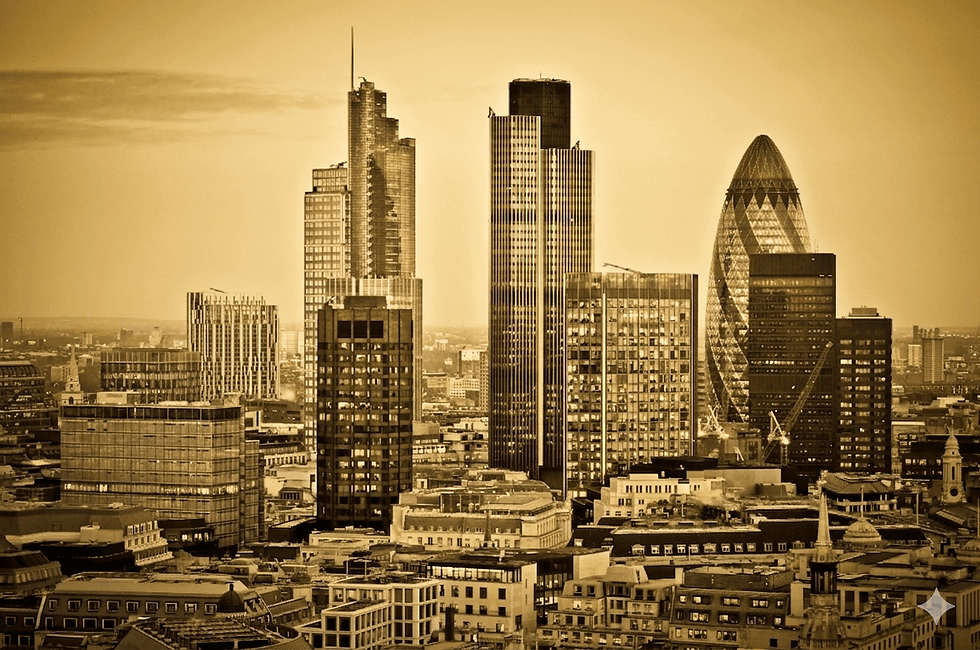
The Silent Offensive
It doesn’t look like a war.
There are no sirens, no breaking news banners, and no footage of destruction. No tanks are seen crossing borders, and there is no visible line where one side advances and the other retreats. Instead, something quieter—but just as powerful—happens behind the scenes.
A country wakes up and finds that its banks cannot process international payments. Its currency begins to slide. Imports slow down, investors disappear, and trade partners hesitate. Within weeks, the economy starts to feel like it is running out of oxygen.
Countries are being cut off, slowed down, or quietly locked out of the systems that keep the global economy running.
No shots are fired. But the damage is real.
This is ongoing invisible war, its battlefield is not land, sea, or air; it is the financial system itself. What has changed in the past two decades is not just the scale of sanctions, but their nature. They are no longer external pressures applied from the outside; they now operate from within the architecture that every modern economy depends on.
In this new era, power no longer comes from controlling territory alone. It comes from controlling access to the arteries of the global system.
When Finance Stopped Being Neutral
For a long time, global finance was treated as infrastructure. It was the plumbing of the world economy. Money moved. Trade settled. Systems functioned.
Banks processed transactions. Payment networks connected countries. Currencies acted as mediums of exchange.
The assumption behind all of this was simple. Finance was neutral. It existed to support economic activity, not to decide who was allowed to participate in it.
That assumption no longer holds.
Today, access to financial systems can be restricted, delayed, or completely removed. When that happens, the effect is immediate. Trade cannot clear. Capital cannot move. Economic activity slows down in ways that are difficult to recover from quickly.
What used to be a background system has become a front line.
The Sanctions Economy — How Global Banks Became the New Frontline
Sanctions did not begin this way.
During the Cold War, they were blunt tools. Governments imposed trade embargoes, froze assets, and limited diplomatic engagement. These measures caused pressure, but they rarely reshaped the global system.
The world at the time was less connected. Economies were more self-contained. Financial systems were slower, less centralized, and less dependent on a single currency or network.
A sanctioned country could still function, even if at a reduced capacity.
That is no longer true.
As finance became digital, centralized, and globally integrated, sanctions moved inside the system itself. Instead of blocking goods at the border, they began to block access at the point of transaction.
Payments could be stopped before they even happened. Banks could be excluded from networks that made global trade possible. Entire economies could be slowed down not by cutting supply, but by cutting access.
Sanctions are no longer events. They are environments that countries are forced to operate inside.
This is what defines the modern sanctions economy.
From Trade Barriers to System Exclusion
The difference between old sanctions and modern ones is not just scale. It is structure.
In the past, pressure came from the outside. Today, it comes from within the system itself.
A country may still produce oil, manufacture goods, or offer services. But if it cannot process payments, insure shipments, or access global banking networks, that production struggles to reach the world.
The shift is subtle but powerful.
Trade is no longer stopped physically. It is slowed, rerouted, or quietly blocked at the financial layer.
This is where the system becomes decisive.
The Weaponization of the Dollar
At the center of this system sits the U.S. dollar.
Most global trade, especially in energy, is still priced and settled in dollars. This creates a form of dependency that is often invisible until it is tested.
When access to dollar-based systems is restricted, the effects ripple outward quickly. Countries face difficulty paying for imports, receiving export revenues, and stabilizing their financial systems.
The dollar, in this sense, is no longer just a currency. It is infrastructure.
This is part of the shift mapped in Beyond the Dollar: How BRICS+ Is Rewiring Global Trade and Finance, where countries are actively looking for ways to reduce reliance on a system they do not fully control. The article explores in detail how global banks became the new frontline
What we are seeing in that article is not the end of dollar dominance, but the beginning of resistance to it.
How Sanctions Are Dismantling Global Trade
Global trade used to be built on efficiency.
Countries produced what they were best at. Goods moved along the fastest and cheapest routes. Markets rewarded cost optimization.
That model is now under pressure.
Sanctions have introduced a new variable: political alignment.
Countries are no longer choosing partners based only on price or proximity. They are choosing based on reliability, risk, and strategic alignment. Supply chains are being redesigned not just to be efficient, but to be resilient.
This transition is already visible in Friend Shoring and the Future of Global Trade Blocs: How Tariffs Geopolitics and Multipolarity Are Rewiring the Global Economy, trade is increasingly shaped by alliances rather than pure economics.
The result is a world where trade flows are being reorganized in real-time, moving away from a single global marketplace into a "multiplex" system of competing ecosystems.
Here is how that real-time reorganization is manifesting:
1. The "Switching Cost" of Alliances
In a purely economic world, trade flows toward the lowest cost. In the era of Friend Shoring, trade flows toward the lowest political risk.
Real-Time Pivot: When a strategic rift opens—such as a new tariff wall or an export ban on critical minerals—companies now shift production to "friendly" nations in months rather than years.
The Logistics of Loyalty: This isn't just moving factories; it’s the instantaneous redirection of shipping routes and the signing of long-term "loyalty" contracts for raw materials that bypass traditional, open commodity markets.
2. Digital Trade Corridors
Trade is being reorganized through the creation of "digital silk roads"—closed loops of data and finance that link allied nations.
Bilateral Integration: Alliances are building exclusive digital customs and payment interfaces. These "fast lanes" allow for near-instant clearance of goods between trusted partners, while creating "friction by design" for those outside the bloc.
The Shadow System: Real-time trade is increasingly happening via central bank digital currencies (CBDCs) and local-currency swaps. This allows nations to settle accounts instantly without ever touching the U.S. dollar or Western banking nodes.
3. Strategic Stockpiling and "Just-in-Case"
The "Just-in-Time" model—which prioritized zero inventory and maximum speed—is being replaced by "Just-in-Case" infrastructure.
Buffer States: Trade is flowing into regional hubs (like the UAE or Singapore) that act as "neutral buffers." Here, goods can be stored, re-packaged, or re-labeled in real-time to navigate the complex web of global sanctions and tariffs.
Commodity Weaponization: Nations now monitor global trade flows to identify vulnerabilities in rivals' supply chains. If a country realizes a rival depends on a specific component, they can quietly restrict that flow before a formal conflict even begins.
4. Fragmented Maritime Routes
Even the physical path of trade is changing. Fear of systemic "deletion" is driving nations to invest in corridors they can physically and digitally secure.
The New Map: We see this in the surge of investment into the IMEC (India-Middle East-Europe Economic Corridor) and the Arctic Northern Sea Route. These are not just paths; they are "hard-wired" alliances that reorganize the map to avoid chokepoints controlled by rivals.
The Result: The End of Neutral Trade
The reorganization is systemic. It means that a decision made in a boardroom in Kampala, Uganda or a ministry in New Delhi, India can instantly shift thousands of tons of cargo across the ocean—not because the price changed, but because the access map did. Global power is no longer confined to governments; it is distributed across these financial, technological, and logistical systems that form the real power map of the 21st century.

The Sanctions Trap
To understand the "Sanctions Trap," we must look at how the very systems designed to isolate Russia and Iran have acted as a catalyst for them to build a parallel economic reality. The data from 2022–2026 shows a clear pattern: high initial impact followed by systemic adaptation.
1. The Russia Example: Redefining the "Global" Market
Russia represents the most significant attempt in history to "delete" a G20 economy from the Western financial core. The initial shock was massive, but the long-term result has been a massive redirection of global trade.
Financial Fortressing: After being cut off from SWIFT and having $285 billion in foreign reserves frozen by the EU and G7, Russia shifted its internal plumbing. By early 2024, nearly 40% of Russia's international trade was settled in Chinese Yuan (CNY), up from less than 2% before 2022.
Energy Redirection: US and EU sanctions denied Russia access to an estimated $450 billion since 2022. However, Russia redirected its energy flow. In 2024, oil exports to China surged to over 108 million tonnes (a 30% increase from 2022). By late 2025, China’s willingness to import from sanctioned facilities like Arctic LNG 2 showed a total disregard for the US sanctions regime.
The Shadow Fleet: To bypass the G7 oil price cap, Russia developed a "shadow fleet" of nearly 600 vessels that operate outside Western insurance and financial networks, ensuring that even under heavy sanctions, its primary revenue stream remains liquid.
2. The Iran Example: The "Sanctions-Adaptation" Economy
Iran provides the blueprint for long-term survival under pressure. Having been largely excluded from global markets since 2012 (and again in 2018), it has built a "resilience model" that focuses on internalizing the supply chain and leveraging strategic "limitless" partnerships.
The China Cushion: China has become Iran's primary economic lifeline, acting as a massive buffer against the U.S and European "Maximum Pressure" campaigns. In 2021, the two nations signed a 25-year Strategic Cooperation Agreement, effectively anchoring Iran into the Chinese economic orbit.
China accounts for approximately 30% of Iran’s total foreign trade, providing a consistent market for Iranian energy and a steady supply of essential industrial machinery and technology that Western firms are forbidden from providing.
By providing a cushion for the Iranian economy, China has effectively neutralized the primary goal of Western sanctions—regime-changing economic collapse—turning Iran into a permanent, sanctioned fortress within the global power system. — Prof. Tinka C. Muhwezi
Industrial Resilience: Despite 40–50% inflation, Iran’s manufacturing sector has proven surprisingly resilient. When the U.S. and its European partners cut ties, Iranian firms didn't collapse; they diversified.
Between 2002 and 2022, industrial growth averaged 13% annually, and even under maximum pressure, output has largely remained stable.
Parallel Trade Hubs: Iran utilizes an expanding network of "re-export hubs" to bypass direct import restrictions and maintain a flow of dual-use technology and consumer goods. In these locations, ownership, shipping manifests, and country-of-origin documentation are modified in real-time to allow goods to flow back into Iran:
The UAE and Turkey: These remain the primary conduits. The UAE (particularly Dubai) serves as a financial and logistical "switchboard," while Turkey provides a critical land bridge for European and industrial goods.
Oman: Increasingly used as a "quiet" alternative to the UAE, Oman’s ports provide a strategic entry point for maritime trade that requires a higher degree of discretion.
Armenia and Georgia: These Caucasian hubs serve as vital transit points for microelectronics and automotive parts. Goods are often imported into these countries and then "sold" to intermediaries before crossing the Iranian border.
Kazakhstan and Kyrgyzstan: As members of the Eurasian Economic Union, these nations facilitate "parallel imports" of Western technology. Components are legally imported into Central Asia and then rerouted to Iran in the south, taking advantage of the lack of internal customs borders in the region.
Iraq: Beyond energy swaps, Iraq acts as a significant "frontier" hub for physical currency (U.S. Dollar) and consumer commodities that are difficult to track via digital banking systems.
By spreading trade across multiple fronts, the Iran ensures that closing one door Dubai simply results in the volume shifting to Oman or Armenia. This horizontal expansion makes total isolation logistically impossible.
Shadow Exports: Iran has maintained oil exports of 1.1 to 1.5 million barrels per day (as of 2026 projections) through discreet shipping routes and informal financial channels. A significant portion of this "shadow" oil is destined for independent Chinese refineries (often called "teapots"), settled in Chinese Yuan or through barter trade and "hawala" style transfers that bypass SWIFT entirely.
3. The Evidence of Fragmentation (The "Trap")
The "Sanctions Trap" is visible in the global data, showing that the world is no longer a unified financial marketplace.
Metric | Pre-Sanctions (Unified System) | Current Trend (The Trap) |
Trade Disputes | Low/Moderate | 27% Rise (2015–2024) |
Financial Exposure | High Interconnectivity | 17% Drop in global exposure for non-bank funds |
Currency Use | USD Hegemony (80%+) | Rising use of CNY, INR, and CBDCs for bilateral trade |
Systemic Risk | Market-Based | Geopolitical Risk-Based |
Why it is a "Trap":
Diminishing Returns: The first time a nation is cut off from SWIFT, it is a catastrophe. The tenth time, the world has already built a "backup" network.
Technological Regression: While Russia and Iran have survived, they suffer from "technologically regressive import substitution"—they can build what they need, but it is often a generation behind. However, for a state focused on survival and sovereignty, a "good enough" domestic system is preferable to a "superior" system they cannot control.
The Incentive to Exit: Every time a bank account is frozen for political reasons, every other "non-aligned" nation in the world (the Global South) looks at their own reserves and wonders if they are next. This drives the BRICS+ expansion and the push for a multi-currency world.
In short, sanctions work as a sprint, but they fail as a marathon. They inflict immediate pain, but they eventually train the target to live—and trade—without you.
When Conflict and Finance Collide
The connection between financial pressure and physical conflict is becoming harder to separate. Sanctions do not operate in isolation; they interact with trade routes, energy flows, and geopolitical tensions. When one part of the system is stressed, the effects spread across others with high-velocity.
This vulnerability is visible in After Hormuz: How a 40-Day War Revealed the Systemic Limits of American Power, where disruption in a physical chokepoint beacuse of the Iran war quickly translated into cascading instability for the world economies.
In that scenario, it wasn't just the physical blockage of tankers that caused the crisis, but the instantaneous repricing of global risk. Within hours of the conflict, maritime insurance premiums spiked by over 1,000%, effectively "sanctioning" trade far beyond the actual conflict zone.
What emerges is a single, interconnected system where the distinction between "economic policy" and "act of war" has blurred.
The Insurance Trap: If a region is deemed a "war zone" by financial underwriters, trade stops even if the ports remain open.
The Commodity Feedback Loop: A physical strike on energy infrastructure triggers automated sell-offs in the futures markets, impacting the currency stability of nations thousands of miles away.
The Information Overlay: Narrative warfare—social media posts and viral headlines—now acts as a kinetic force, capable of triggering bank runs or market volatility before a single shot is fired.
War affects markets. Markets affect policy. Policy affects trade. Trade reshapes alliances. In this new reality, nothing operates independently anymore. To control the battlefield, one must now control the spreadsheet.
The Weaponization of Wealth
One of the less visible shifts in modern geopolitics is how wealth itself is being treated. In the past, national reserves, sovereign assets, and financial holdings were considered stable, almost sacred stores of value. Today, they have become points of strategic vulnerability.
This was most clearly demonstrated following Russia’s invasion of Ukraine on February 24, 2022. In an unprecedented move, the United States and the European Union enacted a financially devastiang option by freezing approximately $300 billion of the Russian Central Bank’s foreign currency reserves held in Western financial institutions.
This event shattered the long-standing assumption that sovereign reserves were neutral property. It sent a shockwave throughout the world, signaling that wealth held within the Western financial architecture is now prone and susceptible to geopolitical leverage.
In this new environment:
Access can be restricted: Central bank digital IDs and the SWIFT messaging system can be used to "de-platform" an entire nation's economy overnight.
Assets can be frozen: Private and state-owned holdings are now viewed as collateral in geopolitical disputes.
Pathways can be narrowed: Correspondent banking relationships can be severed, making even "clean" money impossible to move.
This changes how countries think about security. Wealth is no longer just accumulated; it must be positioned in ways that reduce exposure to systemic control. Whether through the accumulation of physical gold, the use of local currency swaps, or the development of the BRICS+ Bridge payment system, nations are racing to diversify.
In a system where access can be denied, wealth security is not just about what you have, but where and how you hold it.
When Information Moves Markets
Another layer has been added to this system. In a fully digitized financial environment, information travels instantly. Markets react in real-time, and algorithms process signals faster than human decision-making can keep up.
A single statement from a political leader can trigger shifts across currencies, stocks, and commodities within minutes. This was most visible during the Trump presidency, where a single post on X (formerly Twitter) or Truth Social could wipe out or create billions of dollars in market value.
The "Iran War" Tweets: During the height of the U.S.-Iran tensions, Donald Trump’s posts regarding ceasefires and the ending of civilisations often caused the S&P 500 to swing by hundreds of points in a single afternoon.
The Trading Edge: Savvy traders and high-frequency firms developed "Trump bots"—algorithms specifically designed to scan his feed for keywords like "ceasefire," "Iran Peace Deal," or "opening the Strait of Hormuz". By executing trades in the milliseconds between a post being published and the general public reading it, these entities were able to rake in massive profits.
Systemic Volatility: This creates an environment where sentiment is no longer just perception; it is a kinetic force that moves capital.
The Ethics of Influence and Insider Trading
This shift has raised serious questions about the integrity of the information flow. When the "software" running the financial hardware is a social media post, the potential for manipulation is immense.
Investigative reports by the BBC and TIME have highlighted concerns over unusual trading activity occurring just minutes before major policy shifts were announced via social media during the Iran war.
Allegations of Insider Trading: Reports have surfaced regarding "well-timed" trades by individuals with connections to the White House. According to TIME magazine some investors appeared to have gained "early access" to the tone of upcoming market-moving announcements, allowing them to short stocks or buy futures ahead of the public volatility.
The BBC Investigation: The BBC reported on the "Trump Effect," noting how certain hedge funds seemed consistently positioned to profit from unexpected policy reversals communicated through non-traditional channels.
Information has become the software running the financial hardware. In this system, the gap between a thought, a post, and a market collapse has narrowed to near zero. Nothing operates independently anymore.
To control the battlefield of the 21st century, one must not only control the spreadsheet but also the narrative that feeds the AI-algorithms.
A System That Amplifies Everything
The deeper issue is not just the use of sanctions. It is the structure of the system itself.
Global finance is now tightly interconnected. Actions in one part of the system do not stay contained. They spread.
A restriction in one country can affect supply chains elsewhere. A disruption in payments can influence prices globally. A shift in policy can redirect entire trade routes.
The system amplifies everything.
This makes modern economic pressure far more powerful than its historical equivalent.
The Rise of Parallel Systems
As pressure increases, alternatives begin to form. Countries are no longer just theorizing about financial independence; they are building the plumbing for it. What drives them is not ideology—it is the biological necessity of economic survival.
The BRICS Bridge & mBridge: In 2025, the mBridge project (linking China, UAE, Thailand, and Hong Kong) moved from pilot to reality, processing over $50 billion in real-value transactions. By bypassing the correspondent banking system of the West, it allows for "atomic settlement" of trade in local currencies, effectively making traditional sanctions invisible to the participants.
Bilateralism Over Multilateralism: We are seeing a surge in "Local Currency Settlement" (LCS) frameworks. For example, India and the UAE successfully bypassed the Dollar for a major oil transaction in 2024, a trend that expanded in 2025 across the Global South.
The Scale Gap: These systems are still developing. They do not yet match the scale or liquidity of the dominant global networks (the Dollar still accounts for nearly 88% of all currency trades). However, they don't need to replace the system to be successful—they only need to provide a "vent" for when the main system is pressurized.
The Financial Battlefield
The global economy is no longer neutral ground. Every transaction carries weight; every payment route reflects power. Sanctions have transformed finance into a battlefield where control is exercised quietly through the "Power of the Off-Switch."
Access as a Weapon: In the modern age, exclusion is the new blockade. Access determines participation in the global middle class. Exclusion determines vulnerability to 50% inflation and industrial collapse.
The End of Neutrality: Historically neutral financial hubs are being forced to choose. As the "Weaponization of Wealth" continues, even traditional havens are finding it harder to maintain a "Swiss-style" neutrality when the software of the global system demands a political side.
Navigating the Multi-Polar Financial Frontier
The implications of this shift are no longer speculative; they are already shaping the 2026 economic landscape. We are entering an era of jurisdictional safety over simple growth.
For Governments: The challenge is to operate within systems they do not fully control while building enough independent systems to withstand a sudden disconnection.
For Businesses: Risk is no longer just about market volatility or interest rates; it is systemic. A company's supply chain is only as strong as the political relationship between its headquarters and its bank's clearing house.
For Individuals: The systems that move money and support daily life are becoming more political and less predictable. Whether it is the rise of CBDCs or the fracturing of the internet into a "splinternet," the user experience is increasingly dictated by geopolitical geography.
In the age of systemic conflict, the question is no longer how to grow within the system, but how to ensure you remain connected to one. The invisible war does not announce itself with sirens, it announces itself with a "Transaction Declined" message.



Comments