
Tooro Kingdom Succession Crisis Deepens as Oyo’s Heir and Kijanangoma Face Legal Test

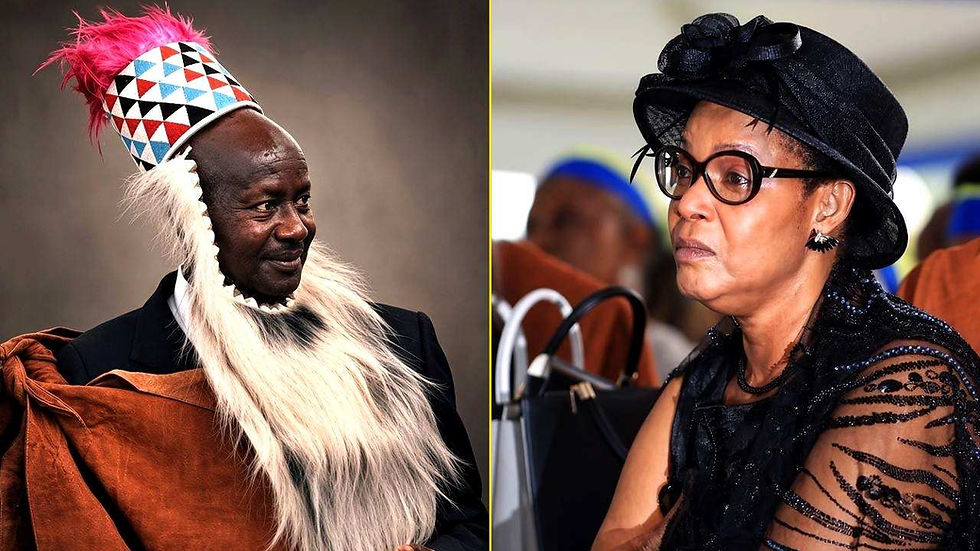
The burial of King Oyo Nyimba Kabamba Iguru Rukidi IV was supposed to close one chapter in Tooro's history.
Instead, it has opened a much more difficult one.
The 34-year-old king was buried at the Karambi Royal Tombs on September 12 after days of bitter disagreement over who should inherit the throne he occupied from the age of three.
The royal clan had selected Edward Rukidi Kijanangoma, Oyo's cousin and a UBC news anchor and editor, while members of Oyo's immediate family insisted that the late king had left a will identifying a biological son as his heir.
The dispute has now moved beyond palace meetings and competing public statements. It is entering a legal and constitutional space in which the government will have to determine how far traditional succession decisions can proceed while a competing claim involving Oyo's reported child remains unresolved.
The Attorney General's legal position has added another layer to the dispute. Reports on the opinion say Oyo's will should be the starting point for determining succession and that its validity can be challenged in court.
That changes the atmosphere around the throne.
The earlier appearance of certainty around Kijanangoma has faded. The question is no longer simply whether the Babiito clan selected him. It is whether that selection can stand while the late king's family pursues a competing claim on behalf of a reported child.
For a kingdom already carrying the weight of decades of royal politics, the Tooro Kingdom Succession Crisis is entering its most consequential phase.
Tooro Kingdom Succession Crisis: Who Has the Stronger Claim to Oyo's Throne?
The competing positions are now relatively clear.
On one side is the Babiito royal clan and the succession process that produced Kijanangoma.
More than 100 Babiito princes and princesses met at Karuziika Palace on August 28, two days after Oyo's death, and selected a 21-member Royal Succession Committee. The committee later selected Kijanangoma as the preferred successor.
Kijanangoma is a member of the royal family and Oyo's cousin. His supporters argue that the selection followed established Tooro customs and avoided another child monarchy after Oyo's own three-year-old coronation in 1995.
The earlier FTN explainer, Tooro's New King: Who Is Edward Rukidi Kijanangoma?, examined his background and the royal lineage that placed him inside the Babiito succession structure.
But the second position comes from Oyo's immediate family.
Princess Ruth Komuntale and Queen Mother Best Kemigisa have maintained that Oyo left a will naming a biological son as heir.
The existence of the reported child was not publicly known during Oyo's lifetime, which has become one of the central points of the dispute. Media reports describe the child as previously unknown within the wider royal establishment.
That has created an unusual legal question.
A biological relationship, by itself, may not automatically settle a traditional kingship. The Babiito process involves recognition, custom, and the formal mechanisms through which a monarch is selected.

Andrew Mwenda has argued publicly that the identity and background of the child's mother also matter under Tooro custom.
The dispute therefore contains two different questions.
Who is Oyo's son?
And even if he is Oyo's biological son, does that automatically make him Omukama?
Those questions are now inseparable.
Mwenda has argued that when the reported child was presented to the succession committee, representatives failed to provide a photograph, supplied conflicting names, and did not provide sufficient information about the child's maternal family. He has also said the committee considered a request for DNA testing.
That uncertainty is precisely why the legal question matters.
The Attorney General's reported position that the will should guide the process, while its validity can be challenged in court, potentially moves the dispute away from a simple clan vote and towards formal legal determination.
It also makes the earlier FTN question in Museveni and the Tooro Succession: Is Kijanangoma Really King Yet? even more relevant.
President Museveni said during Oyo's burial that the government would be happy to work with the new king “when the issue of the new King of the Batooro is solved.” That wording was striking because Kijanangoma had already been publicly selected and had participated in the traditional handover ritual at the royal tombs.
The President's words effectively left the door open.
The government had not treated the succession dispute as conclusively settled.

Museveni, Mao and the New Legal Battle as Mwenda's Feud With Kemigisa Escalates
The government's position is becoming increasingly important because Tooro's traditional institution exists within Uganda's constitutional framework.
Justice and Constitutional Affairs Minister Norbert Mao has called for calm and said his ministry and the Attorney General were still working on the succession dispute. The broader government position is that the matter must be resolved lawfully before a successor is formally recognised at the national level.
That position is consistent with Museveni's public statement at Oyo's burial.
The President did not endorse Kijanangoma as an uncontested king. Instead, he said the government would work with the successor once the issue had been resolved.
The political significance is difficult to ignore.

For years, Museveni maintained a close relationship with Oyo, who became king as a child and was effectively raised within a political environment in which the central government played an important protective role. The official government account describes Museveni as Oyo's guardian since the king was three.
Now that Oyo is gone, that relationship has become part of the succession equation.
At the same time, the feud between Andrew Mwenda and Best Kemigisa has become one of the most visible and combustible parts of the crisis.
Mwenda has repeatedly challenged the Queen Mother's account of the reported heir. He has questioned why the existence of the boy was not publicly known, why the child was not formally presented to the Babiito leadership during Oyo's lifetime and why basic information about the child and his mother was not produced during the succession deliberations.
Queen Kemigisa, for her part, has challenged the legitimacy of the succession process and accused the Babiito side of moving against the royal family before Oyo had been properly buried. Her statement also alleged that security forces restricted the family's movement around Karuziika Palace.
The government subsequently said the security presence was intended to protect mourners and members of the royal family during the mourning period.
Mwenda's response has gone much further.
In posts on X, some of which were subsequently deleted, he accused Kemigisa of attempting to manipulate the succession and made serious allegations concerning earlier events in Tooro's royal history, including the death of his grandmother and the 1999 killing of Prince Charles Kijanangoma. He also accused her of using the Oyo heir dispute as part of a wider struggle for power. Those allegations remain allegations and should not be treated as fact without independent evidence.
His latest public intervention has sharpened the personal dimension of the dispute.
Mwenda has argued that Kemigisa's grief should not shield the succession process from scrutiny, questioning why the reported son was not mentioned publicly at Oyo's funeral and why no photograph or fuller information about the child had been produced.
That argument has itself become controversial.
Agriculture Minister Frank Tumwebaze publicly urged Mwenda to stop the public exchange and allow the kingdom to mourn before continuing the debate.
That intervention reveals the government's wider concern: the succession fight is no longer confined to Babiito elders and the royal household. It is becoming a public contest involving politicians, ministers, journalists, military figures, cultural leaders and competing interpretations of Tooro custom.
And the more the dispute moves into the public arena, the harder it becomes to resolve quietly inside the kingdom.

What Happens to Tooro's Throne Now?
The most important development is that the succession question has survived Oyo's burial.
The traditional ceremony at Karambi gave Kijanangoma a powerful ceremonial moment. He cast the nine coffee berries into Oyo's grave, an act associated with the transfer of royal authority in Tooro. Reuters described the ritual as marking the formal handover of power.
But the government's language indicates that the matter is not closed.
The legal dispute over Oyo's will remains.
The identity and status of the reported son remain contested.
The authority of the Babiito succession committee is now being challenged by sections of the royal family, leaving the government caught between customary authority and the legal process that will determine the kingdom’s next step.
This is why the Tooro Kingdom Succession Crisis is no longer simply a question of who was selected by the clan.
It is a question of whether a traditional succession decision can be treated as final while a competing heir is being advanced through a disputed will.
There is also a wider historical irony.
Tooro spent decades under a child king after Oyo inherited the throne at only three years old. His death has reopened the possibility of another child being placed at the centre of the kingdom's future, even as some members of the royal clan argue that Tooro should avoid repeating the experience of a child monarchy.
The irony is that the dispute is now being fought over the very issue that once made Oyo's reign extraordinary: the relationship between bloodline, tradition and the practical demands of governing a modern cultural institution.
Kijanangoma represents continuity through the established royal clan.
Oyo's reported son represents continuity through direct biological descent.
The will, if accepted as valid, could dramatically alter the legal argument. If challenged successfully, the Babiito process could regain the upper hand.
For now, neither side can simply wish the other away.
Tooro's throne may have changed hands ceremonially, but its legal and political future remains unsettled.


Comments