
Battery Economy: Energy Storage and the New Architecture of Power

Updated: Oct 12

The world is producing more energy than ever before. Solar farms stretch across deserts. Wind turbines rise from coastlines. Governments announce record-breaking capacity numbers year after year. And yet, in many places, the lights still flicker.
Not because energy is unavailable, but because it cannot be used when it is needed.
Solar power peaks at midday. Demand peaks in the evening. Wind is abundant one hour and gone the next. Entire regions now generate surplus electricity that simply disappears because there is nowhere to store it.
According to the International Energy Agency, renewable energy capacity additions reached over 500 GW globally in 2023 alone, the fastest growth in history.
In California, grid operators have repeatedly been forced to curtail excess solar power during peak production hours due to insufficient storage capacity, effectively wasting usable energy.
Energy, for the first time in modern history, is becoming abundant and unreliable at the same time. Production is no longer the problem. Storage is.
The real constraint of the 21st century energy system is not how much power you can generate, but how much of it you can hold, move, and deploy on demand.
From Oil Wells to Battery Cells
For over a century, oil has been be extracted, transported, stored in tanks, and used whenever required. It is dense, portable, and storable. Control over oil meant control over energy itself. Renewables changed that equation.
Sunlight and wind cannot be stored in their natural form. They must be captured, converted, and then stored artificially. That additional step, storage, is where the entire system now bottlenecks.
Energy is no longer something you simply produce and consume. It is something you must actively manage across time.
The transition from oil to renewables is therefore incomplete without a parallel transition from extraction to storage.
And that transition is where power is being redefined.
The Battery Economy: A New Foundation of Power
The battery economy is not just about electric vehicles or consumer electronics. It is a complete reorganization of how energy systems function.
At its core, it is simple: Energy is only valuable when it is available at the right moment.
Batteries make that possible. They allow electricity generated at one point in time to be used at another. They stabilize grids, enable renewable adoption, and create flexibility in systems that would otherwise collapse under flactuations.
But this capability comes at a cost.
Storage is expensive. It requires complex materials, advanced manufacturing, and long-term infrastructure investment.
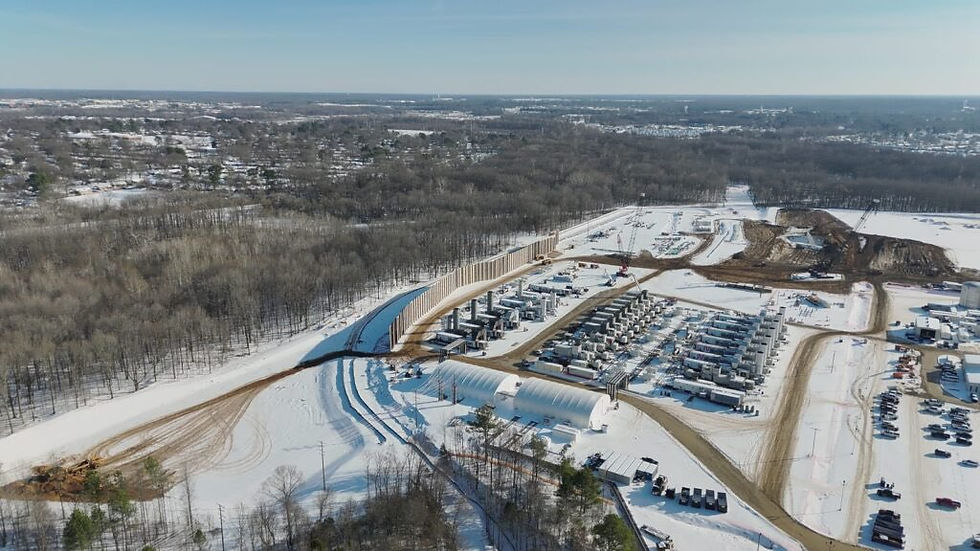
Companies like Tesla have deployed large-scale battery systems such as the Hornsdale Power Reserve in South Australia, which has demonstrated how grid-scale batteries can stabilize flactuations and reduce outage risks.
Meanwhile, Chinese giant CATL has become the world’s largest battery manufacturer, supplying over one-third of global EV batteries and rapidly expanding into grid storage systems.
Unlike oil, which is naturally stored underground, batteries must be built, maintained, and replaced.
This shifts power away from those who simply produce energy toward those who can control the systems that store it.

Critical Minerals: The Global Resource Map
Lithium, cobalt, nickel, and other critical minerals have become the foundation of energy storage. Their distribution across the world is uneven, and their extraction is complex.
Lithium production is heavily concentrated in the “Lithium Triangle” across Chile, Argentina, and Bolivia, which together hold more than half of the world’s known reserves.
Cobalt, another key battery component, is predominantly mined in the Democratic Republic of the Congo, accounting for roughly 70% of global supply.
Countries that lack these resources must secure them through trade, partnerships, or strategic investment. Those that control them gain leverage over the entire global chain.
This shift is already reshaping global dynamics, as explored in Rare Earth and the New Resource Wars How Critical Minerals Are Reshaping Global Power.
The map of energy is no longer drawn by oil reserves alone. It is now defined by mineral supply chains, processing capacity, and refining capabilities.
And unlike oil, many of these processes are highly concentrated in a few countries.
China, for example, processes over 60% of the world’s lithium and nearly 70% of cobalt.
That concentration creates both power and risk.
The Infrastructure Layer: Where Energy Becomes Fragile
Storage does not exist in isolation. It is part of a broader system that includes grids, transmission networks, and distribution infrastructure.
Most of these systems were built for a different era.
Traditional grids were designed for steady, predictable energy flows. Power moved in one direction—from centralized plants to consumers. Renewables disrupt that model entirely.
Energy now flows in multiple directions. Supply fluctuates constantly. Demand patterns shift unpredictably.
Batteries are meant to stabilize this system, but they also introduce new points of vulnerability.
Storage hubs, grid nodes, and energy corridors become critical infrastructure. If they fail, entire regions can lose access to power.
Energy systems are becoming more advanced, but also more exposed.
The Financial Layer: Pricing the Risk of Storage
Energy is no longer priced purely based on supply and demand. It is increasingly priced based on risk.
How reliable is the storage system?How long will the batteries last?What happens if supply chains are disrupted?
These questions shape investment decisions, insurance costs, and long-term planning.
Startups like Form Energy are developing iron-air batteries designed to store energy for up to 100 hours, targeting long-duration storage gaps that lithium-ion cannot fill.
At the same time, Northvolt is building sustainable battery supply chains in Europe to reduce reliance on external markets.
The cost of storing energy can, in many cases, exceed the cost of generating it.
This creates a new economic dynamic where the viability of energy projects depends on their storage strategy.
In the battery economy, energy is not just produced. It is insured, hedged, and financially engineered.
The Race to Control Storage
The global race for energy dominance is no longer centered on oil fields. It is centered on battery supply chains.
China has taken an early lead.
It dominates battery manufacturing, controls significant portions of mineral processing, and has invested heavily in supply chains across Africa, Latin America, and Asia.
The United States is responding through legislation like the Inflation Reduction Act, which allocates billions toward domestic battery manufacturing and clean energy infrastructure.
Companies like BYD are vertically integrating production—from raw materials to finished batteries—giving them control across the entire value chain.
Europe is positioning itself differently, emphasizing regulation, sustainability, and diversification.
Each approach reflects a different understanding of the same reality: Control over storage is becoming a defining element of national power.
The Hidden Constraint: Scaling the Battery Economy
For all its promise, the battery economy faces a fundamental challenge.
Scale.
Demand for storage is growing faster than the systems designed to support it.
According to the BloombergNEF, global demand for lithium-ion batteries is expected to increase more than fivefold by 2030.
Electric vehicles, renewable grids, and industrial applications are all competing for the same resources.
Batteries degrade over time. They require replacement. Recycling systems are still developing. Supply chains remain vulnerable to disruption.
The world wants to transition rapidly to clean energy. But the infrastructure required to support that transition is still catching up.
This gap is where risk accumulates.

Circular Energy: Turning Waste into Power
One of the most important developments in this space is the rise of circular energy systems. Instead of relying solely on new extraction, countries are beginning to recover materials from used batteries and electronic waste.
1. Redwood Materials: The Closed-Loop Pioneer (USA)
Founded by former Tesla CTO JB Straubel, Redwood Materials has moved beyond simple recycling to become a primary materials producer.
The "Urban Mine": Their facility in Nevada currently processes approximately 20 GWh of end-of-life batteries annually.
Efficiency: Their proprietary hydrometallurgical process recovers up to 98% of critical metals like lithium, cobalt, and nickel, which are then refined back into battery-grade anode and cathode components.
Second Life: In 2025, Redwood expanded into Redwood Energy, a division that repurposes retired EV battery packs for large-scale stationary storage, effectively giving a "second life" to energy cells before they are even recycled.
2. Northvolt Revolt: Europe’s Recycled Gigafactory (Sweden)
Sweden’s Northvolt is integrating recycling directly into the manufacturing process through its Revolt program.
The Milestone: In late 2021, Northvolt successfully produced its first battery cell with a cathode made from 100% recycled nickel, manganese, and cobalt. Testing confirmed that these recycled cells performed on par with those made from freshly mined materials.
The 2030 Goal: The company aims to source 50% of its raw materials from recycled batteries by 2030. Their "Revolt Ett" facility is designed to recycle 125,000 tons of batteries per year—enough to support 30 GWh of new battery production without a single new mine being opened.
The Strategic Shift
By 2040, recycled materials could meet 10% to 20% of global demand for battery minerals, significantly reducing geopolitical reliance on fragile supply chains. In this new battery economy, waste is no longer a liability; it is a strategic reserve that sits right inside our borders.
The System Effect: Why Storage Changes Everything
Storage does not just affect energy. It affects everything connected to it.
Energy systems influence trade. Trade influences finance. Finance influences geopolitics. Geopolitics reshapes infrastructure.
What emerges is a tightly coupled system where changes in one layer ripple across others.
This interconnected reality reflects the broader framework explored in The New World Order Is Not Political—It Is Systemic How Energy, Data, and Trade Form the Real Power Map.
The battery economy sits at the center of this framework where mineral resources are connected to digital systems, local infrastructure to global markets, and technological innovation to political strategy.
Storage is more than a technical fix; it is the vital link that transforms unpredictable energy into a steady, usable resource.
Who Actually Controls the Battery Economy
Control in the battery economy does not sit in one place. It is layered.
At the extraction level, countries like Democratic Republic of the Congo and Chile define supply.
At the processing level, China holds the advantage, refining the majority of global lithium and cobalt.
At the manufacturing level, companies like CATL and BYD are scaling production at unmatched speed.
At the systems level, firms like Tesla are redefining how storage integrates into national grids.
This is what makes the battery economy different from oil.
Control is distributed across a chain and that chain is becoming the new map of power.
The Future of Energy is Control, Not Just Production
The assumption that more renewable power automatically equals more stability is a misconception; without adequate storage, increased production actually fuels systemic instability through unmanageable price swings and wasted energy, a reality already seen in regions forced to curtail excess solar.
The emerging global divide will not be between oil-rich and oil-poor nations, but between those that can store energy and those that cannot.
While nations with advanced storage can stabilize their grids and protect industrial output, those without will remain trapped in a cycle of volatility and dependency. Ultimately, true energy independence has shifted from a race for production to a battle for control over time.
Connect the Dots
This story is part of a bigger picture. Like the article, share your thoughts below and pass it on to others who want to understand the forces shaping our world.


Comments