
Global Oil Markets Stabilise Cautiously Under New US-Iran Pact

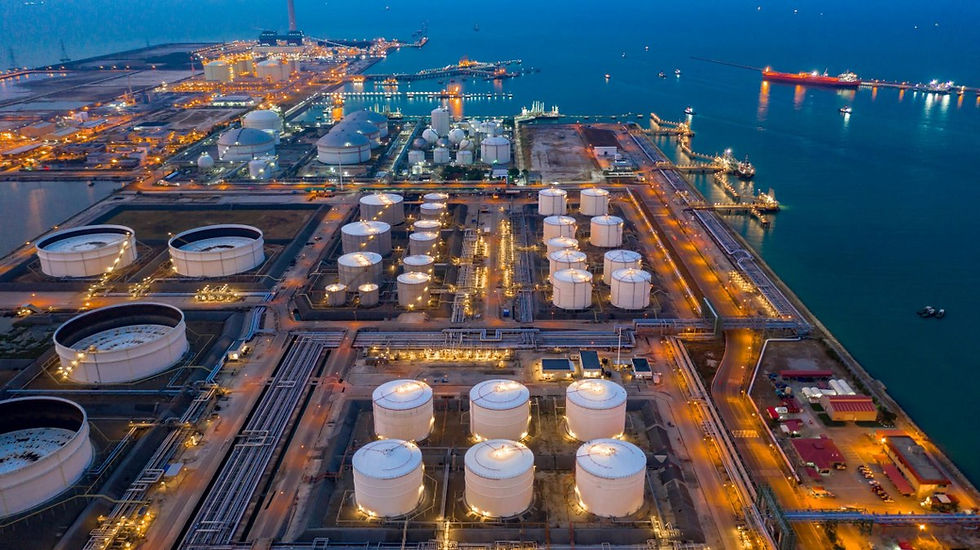
LONDON — Global oil markets are closely watching the critical Strait of Hormuz this week as investors monitor the implementation of the newly signed United States–Iran Memorandum of Understanding (MoU).
While crude oil prices have eased slightly from their recent geopolitical peaks following the formal announcement of a maritime ceasefire, trading desks remain highly volatile, acutely aware that any friction in the world's most vital petroleum chokepoint could instantly trigger a massive price reversal.
The interim agreement, remotely executed by the United States and Iranian leadership, aims to fully restore commercial shipping lanes through the narrow strait in exchange for time-bound economic incentives.
To ensure compliance during a 60-day negotiation window for a broader nuclear deal, the United States Treasury Department has issued temporary general waivers allowing foreign entities to process specific Iranian crude oil exports and financial transactions.
The legal window has provided some respite from global supply fears that threatened an energy crisis earlier this month.
Despite the formal reopening of the shipping lanes, deep undercurrents of strategic anxiety persist among international shipping conglomerates and regional neighbours.
Maritime analysts point out that ambiguity surrounding the collection of transit fees or the implementation of local security patrols could lead to sudden disruptions.
With over 20% of the world's liquefied natural gas and petroleum supply transiting through this tight channel daily, commodity traders emphasise that long-term stability hinges entirely on whether both nations respect the complex parameters of the underlying accord.
The systemic vulnerabilities exposed by the blockade have triggered a major re-evaluation of how physical flows are tracked and secured.
Energy conglomerates are increasingly turning to advanced macro-surveillance networks to mitigate transit risk before tankers even approach high-friction zones.
This shift is deeply explored in the FTN report, "The Invisible Infrastructure: How Satellites, Ocean Sensors, and AI Are Turning Earth into a Real-Time System", which details how the planet is measured in real time—not through isolated observations, but through continuous streams of satellite data, ocean sensors, and artificial intelligence systems that process the Earth as a living, predictable data model.
For global oil markets, this real-time optimisation is no longer a luxury; it is a critical defence mechanism against unpredictable geographic closures.
Furthermore, the escalation has permanently altered the geometry of international logistics, accelerating a structural balkanisation of trade.
This commercial realignment mirrors the findings in the FTN intelligence brief, "Friend-Shoring and the Future of Global Trade Blocs: Geopolitics Rewiring the Global Economy," which argues that a more fragmented global system is emerging—one where trade flows are increasingly shaped not just by cost, but by political alignment, security concerns, and strategic trust.
Nations are actively locking in long-term supply agreements with geographically insulated allies, accepting higher production costs as a necessary premium to bypass volatile maritime choke points entirely.
Ultimately, the fragility of the Islamabad ceasefire underscores that the Middle East remains a volatile epicentre of broader systemic shifts.
The deeper long-term ramifications of this regional friction are captured in the FTN analytical series, "Strait of Hormuz Crisis: War and the New World Order", which notes that the Strait of Hormuz has become the focal point of rising tensions between the United States and Iran.
Military buildups, sanctions, and threats of retaliation have made disruption in the Strait of Hormuz a real possibility rather than just a risk. But the consequences go far beyond the Gulf, affecting global energy security and reshaping international alliances for years to come.
The reopening of the Strait of Hormuz may have calmed the markets, but it has not settled the larger contest over energy, security, and influence.
As negotiations between Washington and Tehran continue, the FTN editorial team will examine whether this agreement marks the beginning of a more stable Middle East or simply the next chapter in a changing global order where trade routes, energy corridors, and strategic alliances increasingly determine who holds power.


Comments