
Gold and the New Global Reserve Order: Central Banks Turn Away from US Treasuries

Updated: Jun 20

According to new data from the European Central Bank, gold has overtaken US Treasuries as the world's largest reserve asset held by central banks. Bullion now accounts for 27 per cent of global reserve assets, surpassing US government bonds at 22 per cent.
The shift marks far more than a change in portfolio management. It signals a deeper transformation unfolding beneath the surface of the international financial system.
For decades, the global financial system rested upon a simple assumption. When uncertainty emerged, central banks bought US government bonds. When crises struck, investors rushed toward the dollar. When nations sought stability, American Treasuries remained the ultimate reserve asset.
That assumption is now facing its most serious challenge in generations.
For much of the twentieth century, gold appeared to be a relic of an earlier era. The Bretton Woods system tied currencies to bullion, but when that framework collapsed in the early 1970s, paper currencies gradually replaced precious metals as the foundation of modern finance. Governments embraced debt markets. Central banks accumulated bonds. Financial power became increasingly tied to confidence in states rather than confidence in metals.
Today, that trend appears to be moving in the opposite direction. Central banks across Asia, Europe, the Middle East, and parts of Africa have spent several years accumulating gold at a pace not seen since the Cold War.
China, India, Turkey, and Poland have emerged as some of the largest buyers. The result has been a historic surge in demand that has helped drive gold prices to record levels while reshaping the composition of global reserves.
The immediate explanation is straightforward. Gold has performed exceptionally well. Prices have risen sharply while many governments confront rising debt burdens, political uncertainty, and growing geopolitical tensions. Yet focusing solely on market performance misses the larger story.
The return of gold is not merely an investment decision. It reflects a changing perception of risk. The sanctions imposed on Russia following the invasion of Ukraine forced central banks around the world to confront a new reality.
Assets held within the international financial system could be frozen. Access to reserves could become a geopolitical issue. Financial infrastructure, once viewed as neutral, could become an instrument of statecraft.
That realisation triggered uncomfortable questions in capitals far beyond Moscow. What happens when reserve assets become vulnerable to political disputes? How should countries protect themselves against sanctions, trade wars, and geopolitical shocks? What form of reserve asset remains beyond the reach of any single government?
This logic sits at the heart of The Invisible War: How Global Banks Became the New Front Line — where global finance is no longer seen as neutral infrastructure, but as a battlefield of state power.
For many central banks, the answer was gold. Unlike bonds, gold carries no counterparty risk. Unlike currencies, it cannot be printed. Unlike digital reserves, it cannot be switched off through sanctions. It remains one of the few financial assets that exist outside the obligations of another state.
Gold's resurgence therefore says as much about geopolitics as it does about economics. The world is entering a period where resilience matters as much as efficiency. Governments are no longer focused solely on maximising returns.
They are seeking protection against uncertainty. Reserve management has become intertwined with strategic planning, national security, and the changing balance of global power.
Central Bank Buying Trends: A Coordinated Shift
This transformation did not occur overnight. Since 2022, central banks have purchased gold at an accelerated rate, with net acquisitions exceeding 1,000 tonnes annually in several peak years before moderating to around 863 tonnes in 2025, a figure that still far surpasses the long-term average of roughly 473 tonnes from 2010 to 2021.
Emerging markets led the charge. China's consistent additions, often through opaque channels that mask the full scale, reflect a deliberate strategy to bolster reserves amid trade frictions and a desire for greater monetary autonomy.
Poland ramped up holdings aggressively, adding hundreds of tonnes in recent years to reach over 580 tonnes by early 2026, framing gold as a cornerstone of national security in an unstable European neighbourhood.
India, Turkey, and Uzbekistan have followed similar paths, each driven by domestic economic pressures and broader strategic calculations. These purchases continued even as gold prices climbed toward and beyond $5,000 per ounce in some periods, demonstrating that the motivation transcended short-term speculation.

Central banks were not chasing momentum; they were building buffers. Surveys from the World Gold Council reveal that a record 43% of central banks planned further increases in 2025, citing gold's role as a hedge against inflation, currency volatility, and geopolitical fragmentation.
This buying wave stands in contrast to the behaviour of advanced economies in the West. Many European and North American central banks maintained relatively stable gold holdings after decades of net selling in the late 20th century.
The divergence highlights a regional split: nations more exposed to potential sanctions or dollar dependency, often those outside traditional Western alliances, moved decisively toward diversification, while others relied on established networks of financial interdependence.
Treasury Risks in an Era of Elevated Debt
The appeal of gold sharpened as the risks attached to US Treasuries became more apparent. America's federal debt has ballooned, surpassing $38 trillion by early 2026, with interest payments consuming a growing share of the budget. Recurrent debates over the debt ceiling introduced periodic uncertainty, reminding global investors that even the world's benchmark safe asset carries political risk.
Foreign holders, including central banks, have closely observed these dynamics. While Treasuries still offer liquidity and a deep market unmatched by alternatives, their long-term value faces pressure from persistent deficits, potential inflation, and the sheer scale of future issuance.
Yields have fluctuated in response to fiscal concerns, occasionally spiking during political standoffs. For reserve managers tasked with preserving national wealth across generations, these vulnerabilities matter. An asset once considered risk-free now carries measurable exposure to US domestic policy choices.
Moreover, the weaponisation of the dollar system through sanctions has amplified these worries. Russia's experience—where a significant portion of its reserves was immobilised—served as a cautionary tale. Countries that might find themselves on the wrong side of future geopolitical disputes recognised the danger of over-reliance on any single issuer's obligations. Gold, held physically and independently, sidesteps this exposure entirely.
This same dynamic sits inside the broader logic explored in The Ukraine War Was Never Just About Ukraine: The New World Order — where the conflict is not treated as a contained regional war, but as a catalyst reshaping defence strategy, energy flows, technological competition, and the architecture of global finance itself.
Sanctions Concerns and the Push for Reserve Diversification
Sanctions concerns have reshaped reserve strategies in profound ways. In a multipolar world, where economic tools increasingly serve political ends, central banks prioritise assets immune to extraterritorial control. Gold fulfils this need perfectly. It cannot be frozen in foreign accounts or excluded from payment systems. Its value derives from scarcity and universal recognition rather than the creditworthiness of any government.
This logic underpins broader reserve diversification efforts. Many nations have reduced the dollar's share in their portfolios, not through abrupt sales, but through gradual reallocation. Gold serves as the primary beneficiary. By increasing bullion holdings, countries achieve balance without necessarily abandoning dollar assets altogether. The result is a more resilient portfolio capable of weathering currency wars, trade disruptions, or shifts in alliances.
Regional comparisons illuminate the trend.
Asian central banks, navigating complex relationships with both the US and China, have diversified most aggressively.
Middle Eastern oil producers, traditionally heavy in dollar reserves due to petrodollar recycling, have also increased gold allocations as they pursue Vision 2030-style economic reforms and hedge against energy transition risks.
European players like Poland act partly out of historical memory of financial instability, while African nations rich in gold production see strategic value in converting domestic resources into official reserves.
Gold and the New Global Reserve Order: Resilience in a Fragmenting World
This evolving landscape marks the emergence of Gold and the New Global Reserve Order. Central banks are no longer content to operate under the old assumptions of dollar-centric stability. Instead, they are actively constructing a more balanced and resilient framework, one in which gold plays a central anchoring role alongside traditional reserve currencies.
Confidence in the dollar, while still dominant in trade and transactions, is gradually eroding as alternatives gain traction.
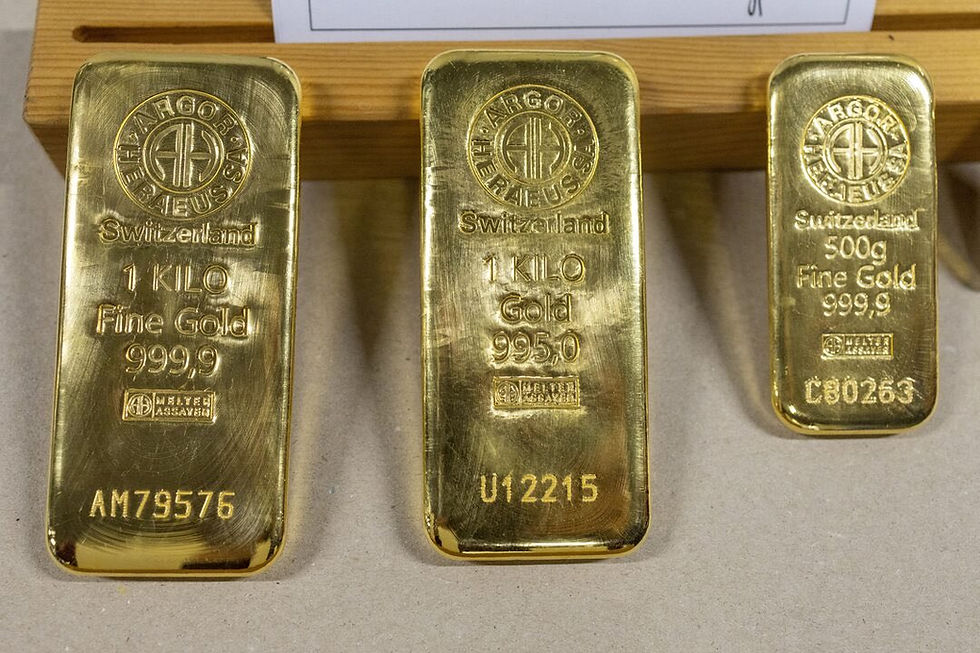
The vast inflows of gold into central bank vaults originate from a mix of recycled supply, mine production particularly from Africa and other emerging regions.
Looking Forward: Gold's Enduring Relevance
Gold's physical properties—portability, durability, and scarcity—complement rather than compete with one another going forward. It offers a hedge against the very uncertainties that digital transformation can exacerbate, such as cyber vulnerabilities or supply chain disruptions in critical minerals.
The future structure of the international system may well feature a hybrid reserve order: the dollar retaining primacy in many domains, but sharing space with gold, regional currencies, and perhaps new digital instruments.
Central banks' behaviour signals preparation for this multipolarity.
They are not abandoning the existing system wholesale; they are fortifying their positions within it, ensuring options for scenarios in which trust frays.
This shift carries implications far beyond balance sheets. It reflects a world where economic security intertwines with geopolitical autonomy.
Nations once content to rely on US financial stewardship now assert greater control over their reserves.
The move toward gold embodies prudence rather than panic, a recognition that no single asset or issuer can indefinitely guarantee stability amid rising global tensions.
As this new reserve order takes shape, gold's role illuminates broader truths about power, trust, and adaptation.
Central banks, through quiet accumulation rather than dramatic declarations, are rewriting assumptions that guided finance for half a century. Their choices suggest a future in which resilience, diversification, and strategic independence define success as much as growth or efficiency.
In embracing gold once more, the world's monetary authorities affirm an ancient truth: in times of profound change, the most reliable safeguards are often those that have endured the longest.
The story of gold's return is ultimately one of measured recalibration.
It underscores how history's cycles between confidence in institutions and faith in enduring stores of value continue to influence the architecture of global wealth.
As central banks navigate an uncertain horizon, their increasing preference for bullion offers a steady reference point, grounding the financial system in something more permanent than policy pronouncements or political promises.
This evolution promises to shape international economics for decades to come, rewarding foresight and caution in equal measure.
Gold's return to the centre of the global reserve system may be about more than finance.
As nations compete for technological leadership, secure supply chains, energy resilience, and strategic autonomy, the renewed importance of gold begins to look less like a reaction to economic uncertainty and more like a signal of structural change.
That broader transformation is the focus of the next FTN analysis, The New Gold Rush: AI, Strategic Resources and the Future of Global Power.


Comments