
Uganda's Earthquake Readiness: Why Building Standards Matter Now

Earthquakes often dominate global headlines only after buildings collapse, communities are displaced, and rescue teams begin searching through the rubble. But the best way to prepare a country for an earthquake is not to respond well when disaster strikes but to prevent the needless loss of life before it happens.
For Uganda, this conversation is neither new nor theoretical. The country's position along the Western Branch of the East African Rift Valley System places several regions within an active seismic zone. Historical earthquakes in Fort Portal, the Rwenzori region and Katonga have demonstrated that seismic activity remains part of Uganda's geological reality.
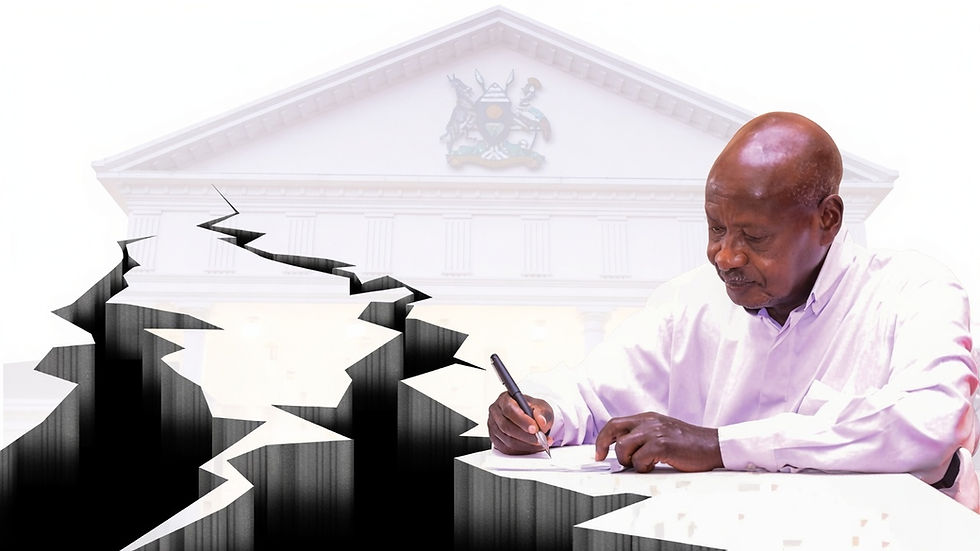
Recognising these risks, President Yoweri Museveni issued Executive Order No. 1 of 2023, dated 30th June, 2026, directing government agencies to strengthen earthquake preparedness through building audits, improved engineering standards, and nationwide compliance measures.
The directive highlights an important shift in public policy: disaster resilience should become an integral part of national development rather than an emergency response after tragedy occurs.
As cities expand vertically and urban populations continue to grow, Uganda's earthquake readiness increasingly depends on the quality of its buildings, the effectiveness of regulatory institutions and the willingness to enforce standards that protect public safety.
Uganda Earthquake Readiness Starts with Safer Construction
Uganda's earthquake readiness lies in the structures where people live, work, study and receive healthcare. While earthquakes cannot be prevented, many of their deadliest consequences can be reduced through sound engineering, proper construction practices and strict compliance with building regulations.
Museveni’s Executive Order instructs engineers from the Ministry of Works and Transport, local governments, Kampala Capital City Authority (KCCA) and public universities to evaluate existing buildings, set suitable seismic standards and ensure future developments comply with those standards.
The objective is straightforward: minimise structural failures before a major earthquake exposes weaknesses that could otherwise have been addressed.
The Executive Order also references the resilience of Fort Portal's Virika Cathedral, which was deliberately designed to withstand powerful earthquakes after earlier seismic events damaged other buildings in the region.

This example reveals a vital principle of modern engineering. Earthquakes rarely become humanitarian disasters because the earth shakes. When buildings and infrastructure are properly designed and built to withstand seismic forces, the ground can tremble without bringing everything down. Disaster only occurs when structures are poorly designed, weakly constructed, or poorly maintained, and they collapse.
That is why investing in resilient infrastructure in Uganda is so important. It is a direct investment in public safety, economic continuity, and the country’s long-term development. By ensuring buildings and infrastructure can endure the earth’s movements, Uganda can protect lives, preserve livelihoods, and build a stronger, more secure future.
Building Safety Requires More Than Earthquake Planning
Earthquake resilience begins long before an earthquake occurs. It starts with how buildings are designed, approved, constructed and maintained throughout their lifespan.
The National Building Review Board (NBRB) plays a central role in promoting compliance with Uganda's Building Control Act by encouraging adherence to approved building standards, professional supervision and structural safety requirements.
These guidelines are intended not only to improve construction quality but also to protect occupants from preventable structural failures caused by poor workmanship, unauthorised modifications or inadequate engineering oversight.
Recent enforcement operations by Kampala Capital City Authority (KCCA) provide another example of how urban management intersects with public safety. While the removal of illegal kiosks, roadside markets and makeshift structures has largely been discussed in terms of city order and traffic management, the exercise also reflects broader concerns about public safety and compliance with planning regulations.

Structures erected without proper approvals, engineering assessments or consideration for emergency access can create significant risks during earthquakes, fires, floods and other emergencies. They may obstruct evacuation routes, compromise surrounding buildings or expose occupants to avoidable hazards.
Viewed through this broader lens, urban enforcement is not simply about beautifying Kampala. It is also about reducing risks before they evolve into larger public safety crises.
What Turkey and Syria Taught the World About Earthquake Resilience
The devastating earthquakes that struck Turkey and Syria in 2023 fundamentally changed how governments view disaster preparedness. Entire neighbourhoods were flattened in minutes, and the collapse of thousands of buildings revealed that engineering standards, regulatory enforcement and construction quality often determine the scale of human loss as much as the strength of the earthquake itself.
For countries such as Uganda, the lesson is clear. Preparedness cannot begin after disaster strikes. It must be embedded within planning policies, building regulations, infrastructure investment and public awareness long before seismic activity tests the resilience of communities.
The experiences of Turkey and Syria also highlighted that population growth and rapid urbanisation demand equally strong investment in resilient construction to protect lives.
Venezuela's Earthquake Response Reinforces Uganda's Readiness Agenda
The importance of strengthening Uganda's earthquake readiness has been reinforced once again by recent developments in Venezuela. As the Venezuela Earthquake Death Toll Rises as Rescue Efforts Intensify, emergency responders continue searching damaged communities while thousands remain displaced by repeated aftershocks.
The unfolding humanitarian response demonstrates how quickly earthquakes can overwhelm emergency services when buildings collapse, infrastructure fails, and access to affected communities becomes difficult. It also highlights why preparedness is ultimately measured years before an earthquake occurs rather than during the rescue operation itself.
For Uganda, Venezuela's experience serves as another reminder that strengthening building standards, enforcing planning regulations and investing in resilient infrastructure are long-term national priorities rather than temporary policy initiatives.
Uganda Has the Opportunity to Prepare Before Disaster Strikes
Unlike countries that have suffered catastrophic earthquakes with devastating human-life and economic costs, Uganda still has an opportunity to strengthen its resilience before experiencing a disaster of similar magnitude. That opportunity, however, depends on whether policies are consistently implemented rather than remaining on paper.
Executive Order No. 1 of 2023 outlines a framework that extends beyond engineering. It calls for coordinated action between the Ministry of Works and Transport, local governments, Kampala Capital City Authority (KCCA), public universities and professional engineers to assess existing buildings, establish appropriate construction standards and ensure future developments comply with those requirements.
Such collaboration is becoming increasingly important as Uganda's urban centres continue expanding. Kampala alone has witnessed rapid commercial and residential construction over the past two decades, with multi-storey buildings, shopping complexes and mixed-use developments reshaping the city's skyline. While this growth reflects economic progress, it also places greater responsibility on regulators, developers and engineers to ensure every new structure is designed with public safety at its core.
The National Building Review Board (NBRB) continues to promote compliance with Uganda's Building Control Act through professional oversight, technical guidance, and adherence to approved construction standards. This oversight is vital, given that a comprehensive NBRB survey revealed that only 22.7% of buildings across Uganda's cities fully meet national safety and regulatory standards. These regulations are intended to ensure buildings remain structurally sound throughout their lifespan, protecting occupants not only from earthquakes but also from structural failures resulting from poor workmanship, overloading, or unauthorised alterations.
The recent expulsion of Kampala street vendors, demolition of illegal kiosks, roadside markets and other makeshift structures by KCCA has also generated debate among city residents. Although many viewed the exercise through the lens of urban order and traffic management, it carries an equally important public safety dimension.
Informal developments constructed without planning approval or engineering supervision may obstruct emergency access routes, compromise drainage systems and expose occupants to unnecessary risks during disasters.
As Uganda continues modernising its cities, balancing economic opportunity with regulatory enforcement will become more important.
Safe urban development is not achieved by constructing more buildings alone but by ensuring those buildings are planned, inspected and maintained according to nationally recognised standards.
Building Resilience Is a Long-Term Investment
Earthquake preparedness should never be viewed as an isolated government programme. It is part of a broader commitment to sustainable urban planning and responsible governance.
Countries that consistently invest in modern engineering standards, rigorous inspections and professional accountability generally experience lower casualties during major earthquakes than those where construction regulations are poorly enforced. While no building can eliminate every risk associated with powerful seismic activity, resilient design significantly increases the likelihood that occupants can evacuate safely and emergency services can respond effectively.
Uganda's own history provides evidence that preparedness makes a difference. Buildings intentionally designed to withstand seismic activity, like the Virika Cathedral, have demonstrated greater resilience during previous earthquakes, reinforcing the value of engineering decisions made long before disaster strikes.
The experiences of Turkey, Syria and, more recently, Venezuela should therefore not be viewed simply as distant international tragedies. They are reminders that seismic risk is a global challenge requiring local solutions. Every earthquake offers lessons for countries that choose to learn before experiencing similar events themselves.
For Uganda, the conversation is no longer whether earthquakes can occur. Geological history has already answered that question. The more important challenge is whether today's planning decisions will determine how safely communities withstand tomorrow's uncertainties.
Final Thoughts
Uganda's earthquake readiness ultimately extends beyond fault lines and geological surveys. It reflects the country's commitment to protecting lives through stronger institutions, better urban planning, consistent enforcement of building standards and responsible governance.
President Museveni's Executive Order provides a policy framework, while institutions such as the National Building Review Board and Kampala Capital City Authority contribute to creating safer communities through regulation and enforcement. Together, these efforts recognise a simple but important truth: resilience is built long before the earth begins to shake.
As Uganda continues investing in infrastructure and urban development, every compliant building, every professional inspection and every properly enforced regulation becomes part of a larger national effort to reduce risk.
In a region where seismic activity remains an ever-present reality, preparedness is not simply good planning. It is an investment in protecting future generations.



Comments