
Iran War: The Long Game for Middle East Dominance

Updated: Sep 3

Executive Summary
Nearly two months after the ceasefire that ended fourty days of intense fighting, the Iran war remains far from resolved.
Despite diplomatic efforts, reports of continued maritime tensions in the Persian Gulf, disputes over proposed peace arrangements, and renewed military incidents suggest the conflict has entered a new phase defined less by direct confrontation and more by strategic endurance.
This article argues that the Iran war is no longer solely a military contest between Tehran and Washington. It has evolved into a systemic struggle involving energy security, global trade routes, artificial intelligence, maritime infrastructure, financial networks, and the emerging multipolar new world order.
From the Strait of Hormuz to AI-driven deterrence systems, the conflict to a great extent reveals how modern power operates through interconnected systems rather than traditional battlefields alone.
By examining Iran's strategy of resistance, America's search for leverage, the growing role of China and Russia, and the technological transformation of warfare, this analysis explores why the conflict continues to matter long after the ceasefire and what it reveals about the future architecture of global power.
Table of Contents
Introduction: The War That Refused to End
President Trump and The Situation Room Problem
Why Iran Remains Defiant
The Persian Gulf Has Become the Real Battlefield
Hormuz Still Holds the World Economy Hostage
Iran War The Long Game Is Also a War Against Time
China, Russia and the Multipolar Opportunity
The Invisible Infrastructure Watching the War
The Long Game Is About More Than Iran
About the Author
The ceasefire was supposed to end the crisis.
Instead, it revealed what the crisis had become.
Months after the guns fell silent, the Middle East remains suspended between war and peace, neither fully returning to normalcy nor descending back into the volatility that characterized the fourty days of the Iran war that shook global energy markets, rattled military planners, and exposed vulnerabilities extending far beyond the Persian Gulf.
The headlines have become less dramatic. Tanker traffic through the Strait of Hormuz remains unpredictable, with vessels frequently blocked and only occasionally allowed to proceed.
Diplomats continue speaking about negotiations.
Markets no longer react with the same panic that accompanied the first missile barrage exchanges.
Yet beneath that appearance of stability, the underlying confrontation remains unresolved.
Reports of maritime incidents continue emerging from the Gulf, underscored by recent, volatile flare-ups; according to a report by WUSF, the situation escalated yet again with the U.S. hitting Iranian radar systems, which triggered an immediate retaliation from Iran as they targeted a U.S. military base in Kuwait. Washington and Tehran offer conflicting narratives regarding possible negotiations. American officials periodically signal that diplomacy remains possible, while Iranian leaders insist that no meaningful settlement is currently taking shape.
Military assets remain deployed across the region.
Intelligence services operating at full tempo.
Sanctions in place.
The result a conflict that's evolved rather than ended.
The online community still views the crisis almost entirely through a military lens, missing the deeper shifts at play. Analysts assess missile stockpiles, troop movements, naval deployments, and debate whether another round of direct fighting is imminent. Those questions matter, but somehow miss the larger story.
The Iran war the long game is no longer primarily about tactical military exchanges; it has shifted into a grueling contest of strategic endurance."
For Washington, the objective has long been to constrain Iranian power, limit Tehran's regional influence, secure maritime routes, and preserve a balance of power favourable to American interests. For Iran, the objective appears fundamentally different. Tehran does not necessarily need to defeat the United States in any conventional sense. It simply needs to demonstrate that American pressure, however intense, cannot fundamentally reshape the Islamic Republic or force its surrender.
This distinction changes how victory is measured.
The United States often approaches its conflicts on the assumption that sufficient pressure can eventually produce a political settlement. Sanctions, military pressure, diplomatic isolation, and economic leverage become instruments designed to push an opponent toward a desired alignment.
Iran, however, has spent decades adapting to this playbook. Its leadership emerged from a political culture shaped by sanctions, external pressure, economic hardship, and repeated confrontations with the West. Rather than viewing these pressures as temporary obstacles, Tehran has built much of its strategic firewall around endurance, resilience, and long-term survival.
This difference helps explain why the ceasefire did not produce the outcome many observers expected.
When the forty-day Iran war ended, there was an assumption in some Western circles that the conflict would gradually transition toward diplomacy. The logic seemed straightforward. Both sides had experienced significant loses. Regional actors wanted stability. Energy markets required predictability. International pressure favoured de-escalation.
What followed instead was something more complicated.

The military confrontation subsided, but the broader struggle merely shifted into different arenas. Maritime friction continued around the Strait of Hormuz. Economic restrictions remained intact. Political rhetoric hardened. Regional Iranian proxy networks like the Houthis, Hezbollah remained on high alert. The dispute over influence, and regional order continued largely unchanged.
The battlefield had expanded beyond military confrontation.
In many ways, this transition reflects a pattern that FTN previously examined in The Invisible Blockade: How Superpowers Rule Through Friction. Modern conflicts operate through pressure rather than occupation, through mounting constraints rather than conquest.
Superpowers like the United States of America attempt to constrain rivals by influencing the systems surrounding them. Global shipping lanes are weaponized into strategic corridors. Financial networks become instruments of leverage. Technology restrictions become forms of containment. Maritime chokepoints become pressure points capable of affecting entire economies.
The Iran confrontation increasingly fits that model.
The question is no longer who controls a battlefield.
The question is who can better absorb pressure in an interconnected global system.
That question extends directly to the Strait of Hormuz, the narrow maritime corridor that has remained at the center of this confrontation from the very beginning of the Iran conflict.
During the forty-day war, Hormuz emerged not merely as a geographic location but as a symbol of the relationship between regional conflict and global vulnerability. Nearly every major economy depends, directly or indirectly, on energy flows moving through waters that can be disrupted by a relatively small number of actors.
As FTN argues in Strait of Hormuz Crisis: War and the New World Order, the significance of Hormuz lies not only in the oil passing through it but in what it reveals about modern power itself. Globalization created extraordinary efficiency, but it also created concentration. Supply chains, shipping routes, energy corridors, and financial systems became increasingly interconnected. That interconnectedness generated prosperity, yet at the same time, it created strategic vulnerabilities capable of transforming local crises into global disruptions.
The Iran war the long game continues to expose those vulnerabilities.
The ceasefire days that followed exposed even something unexpected.
They revealed the limits of military success in a world where economic systems, political legitimacy, technological infrastructure, and strategic patience often matter as much as conventional force.
That may ultimately become the defining lesson of the conflict.
The ceasefire ended the first phase of the war. What followed has become a slower, more complex struggle unfolding across diplomatic negotiations, energy markets, maritime routes, intelligence networks, and competing visions of regional order.
Iran War: The Long Game Begins After the Ceasefire
The most revealing aspect of the ceasefire may be that both sides interpreted it differently from the moment it was announced.
In Washington, the pause in fighting was widely viewed as an opportunity to stabilize the region, reduce pressure on global energy markets, and create space for diplomacy. The assumption was not necessarily that all disputes had been resolved, but that the conflict had reached a point where negotiations could gradually replace military confrontation.
Tehran appeared to see something else entirely.
Iranian officials repeatedly emphasized that the ceasefire did not represent a political settlement. In their view, the underlying causes of the conflict remained unresolved. Sanctions were still in place. Military forces remained deployed across the region. Strategic pressure continued. From Tehran's perspective, the war had not ended. It had merely entered a different phase.
That distinction matters because it explains much of what followed during the weeks and months after the guns largely fell silent.
The ceasefire reduced the intensity of direct military exchanges, but it did not produce trust. Diplomatic statements continued colliding with military deployments. Public discussions about negotiations unfolded alongside reports of heightened maritime tensions. Both sides spoke about stability while simultaneously preparing for instability.
The contradiction reflected a deeper reality.
Modern conflicts rarely conclude in the way wars once did. There are no surrender ceremonies. No clear declarations of victory. No universally accepted endpoint. Instead, conflicts increasingly evolve into prolonged competitions involving economic pressure, technological restrictions, intelligence operations, diplomatic maneuvering, and strategic signaling.
The Iran war the long game increasingly fits this pattern.
The forty-day war demonstrated what direct confrontation could look like. The period that followed has demonstrated what sustained strategic competition looks like when neither side achieves decisive victory.
This transition was visible almost immediately after the ceasefire. Reports of maritime incidents continued emerging from the Persian Gulf. Commercial shipping companies remained cautious. Insurance costs associated with regional transport remained elevated. Energy traders continued watching Hormuz as closely as they had during active fighting. Military commanders maintained deployments that suggested preparation rather than relaxation.
The atmosphere resembled neither peace nor war.
Instead, it reflected something increasingly common in twenty-first-century geopolitics: a state of managed confrontation in which both sides attempt to improve their position without triggering a full-scale escalation.

For the United States, this meant maintaining pressure while keeping diplomatic channels available. Washington continued seeking leverage through sanctions, military presence, and regional partnerships while signaling openness to negotiations that might reduce future risks. Yet every effort to project strength carried its own complications. Excessive pressure risked provoking renewed confrontation. Insufficient pressure risked appearing weak. The result was a balancing act requiring constant recalibration.
Iran faced a different challenge.
The Islamic Republic of Iran needed to demonstrate resilience without attracting overwhelming retaliation. Its leadership sought to preserve domestic legitimacy, reassure regional allies, and project deterrence while avoiding actions that could unite international opposition. This required a strategy built around patience rather than dramatic escalation.
That patience has become one of the defining characteristics of Iranian statecraft.
While Western governments often operate within political cycles measured in months or years, Iranian leaders frequently frame strategic competition in generational terms. They view endurance not simply as a necessity but as a source of strength. Survival through sanctions, isolation, economic pressure, and military threats becomes evidence that the system itself remains viable.
This difference in perspective helps explain why the ceasefire failed to produce the political momentum many observers anticipated.
Washington looked for pathways toward resolution.
Tehran focused on preserving leverage.
As a result, the conflict gradually migrated away from the battlefield and into the wider systems that sustain modern power. Energy markets became part of the geopolitical battlefield. Shipping routes became part of the attrition campaign. Financial networks became part of the machinery of warfare.
Diplomatic forums, intelligence operations, and information campaigns all became extensions of a contest that no longer depended solely on military action.
The conflict that emerged after the forty-day war is therefore not a story of peace replacing war. It is a story of war evolving into something less visible but potentially more enduring. The missiles that dominated headlines may have become less frequent, yet the larger struggle over influence, energy, regional order, and strategic endurance continues unfolding across multiple fronts simultaneously.
The ceasefire marked the end of one chapter.
The long game was already beginning.
The First Sixty Days After the War
History often treats ceasefires as endings.
In reality, they frequently function as transitions.
The period immediately following the forty-day conflict demonstrated why. While military activity declined significantly, the strategic environment remained unstable. Every major actor in the region continued operating as though another crisis could emerge at any moment. Governments spoke the language of de-escalation while simultaneously preparing for escalation. Diplomats discussed peace while military planners reviewed contingency plans. Markets stabilized, yet never fully relaxed.
The first signs appeared in the Persian Gulf.
Commercial shipping resumed, but under conditions shaped by caution rather than confidence. Shipping companies adjusted routes. Insurance premiums reflected lingering uncertainty. Energy traders remained fixated on developments around the Strait of Hormuz because everyone understood that the waterway remained vulnerable even after the ceasefire.
This uncertainty was not simply about military confrontation.
It reflected a growing recognition that the war had exposed deeper structural tensions that no ceasefire could immediately resolve. The conflict had revealed how dependent the global economy remained on a small number of strategic chokepoints. It had exposed how quickly regional instability could ripple outward into financial markets, energy prices, and supply chains. Most importantly, it demonstrated that military victories and political solutions are often entirely different things.
The first month after the ceasefire therefore unfolded under an atmosphere of strategic ambiguity.
Reports emerged of renewed maritime incidents and encounters involving military vessels operating in and around the Gulf. While neither side appeared eager to trigger another large-scale confrontation, neither side appeared willing to significantly reduce its regional posture. The result was an environment in which every incident carried the potential to escalate into something larger.

By the second month, attention shifted toward diplomacy.
Washington signaled that pathways toward a broader settlement remained possible. Officials periodically suggested that negotiations could address outstanding disputes surrounding security arrangements, sanctions, and regional stability. Yet these signals were frequently met with skepticism in Tehran, where leaders continued insisting that meaningful negotiations could not occur while pressure mechanisms remained intact.
The disagreement revealed a familiar pattern.
The United States tended to view negotiations as a process that could occur alongside pressure. Iran viewed pressure itself as evidence that genuine negotiations had not yet begun.
As both sides defended their positions, reports emerged suggesting continued tensions behind the scenes. Public optimism surrounding diplomacy repeatedly collided with statements indicating that no comprehensive breakthrough was imminent. Every hopeful signal appeared accompanied by a contradictory one.
For observers, the situation became simply difficult to interpret.
Were negotiations advancing?
Were they stalled?
Was the region moving toward stabilization or merely preparing for another confrontation?
The answer appeared to be all three simultaneously.
This ambiguity reached Washington's political leadership as well. Reports suggested that discussions inside the Situation Room became focused on how to manage a conflict that no longer fit traditional categories. The war had not disappeared, yet neither had it resumed in its earlier form. Policymakers found themselves confronting a challenge that military power alone could not easily solve.
The complexity of the situation became even clearer as reports surfaced of attacks against American interests in the region, including allegations involving facilities hosting U.S. personnel. Competing narratives emerged almost immediately regarding responsibility, intent, and implications. Iranian officials disputed various claims while American officials assessed whether such incidents represented isolated events or part of a broader strategy.
Regardless of interpretation, the incidents reinforced a larger reality.
The ceasefire had reduced violence.
It had not removed hostility.
This distinction matters because hostility can persist long after open warfare subsides. Rival states still compete for influence. Intelligence services remain active. Proxy networks maintain their operations. Economic pressure continues to shape political and strategic decisions. Strategic distrust becomes embedded within institutions, enduring long after military activity declines.
In many ways, the first ninety days after the conflict validated the argument advanced in FTN's earlier analysis After Hormuz: How a 40 Day War Revealed the Systemic Limits of American Power. The article argues that the conflict had exposed a growing mismatch between military capability and strategic control. The United States retained overwhelming force, yet force alone could not guarantee predictable political outcomes. The war demonstrated that modern power increasingly operates within interconnected systems where economics, energy, technology, information, and public perception shape results alongside military strength.
Those systems continued operating after the ceasefire.
Hormuz remained vulnerable.
Energy markets remained sensitive.
Regional alliances remained under pressure.
Global supply chains remained exposed.
And perhaps most importantly, neither side appeared prepared to abandon its long-term strategic objectives.
By the end of the third month, the conflict had entered an unusual phase. The headlines no longer reflected the intensity of active war, yet the underlying competition remained remarkably similar. Washington and Tehran were still searching for strategic advantage. Competing narratives continued to shape public perceptions. Behind the scenes, each side was positioning itself for whatever phase might come next.
The ceasefire may have prevented immediate catastrophe.
It had not resolved the struggle that produced it.
Instead, the first sixty days revealed that the conflict was evolving into something broader than a military confrontation. It was becoming a contest over influence, endurance, leverage, and the future balance of power in one of the world's most strategically important regions.
That realization increasingly points toward the central question confronting Washington.
What happens when the strongest military power in the world finds itself with fewer attractive options than ever before to win a war?
President Trump and The Situation Room Problem
Every great power eventually encounters a crisis that exposes the difference between possessing power and knowing how to use it.
For the United States, the period following the fourty-day war appears to be such a moment.
From the outside, Washington appears to retain every advantage. The United States maintains the world's most powerful military, extensive regional alliances, unmatched intelligence capabilities, and significant influence over global financial systems. Yet the post-ceasefire environment with Iran has revealed an uncomfortable reality. Strategic superiority does not eliminate difficult choices. In some situations, it merely makes the consequences of those choices more visible.
This challenge appears to have played out inside the White House Situation Room, where President Trump and his policymakers have reportedly weighed competing options while attempting to prevent the conflict from spiraling into another major confrontation.
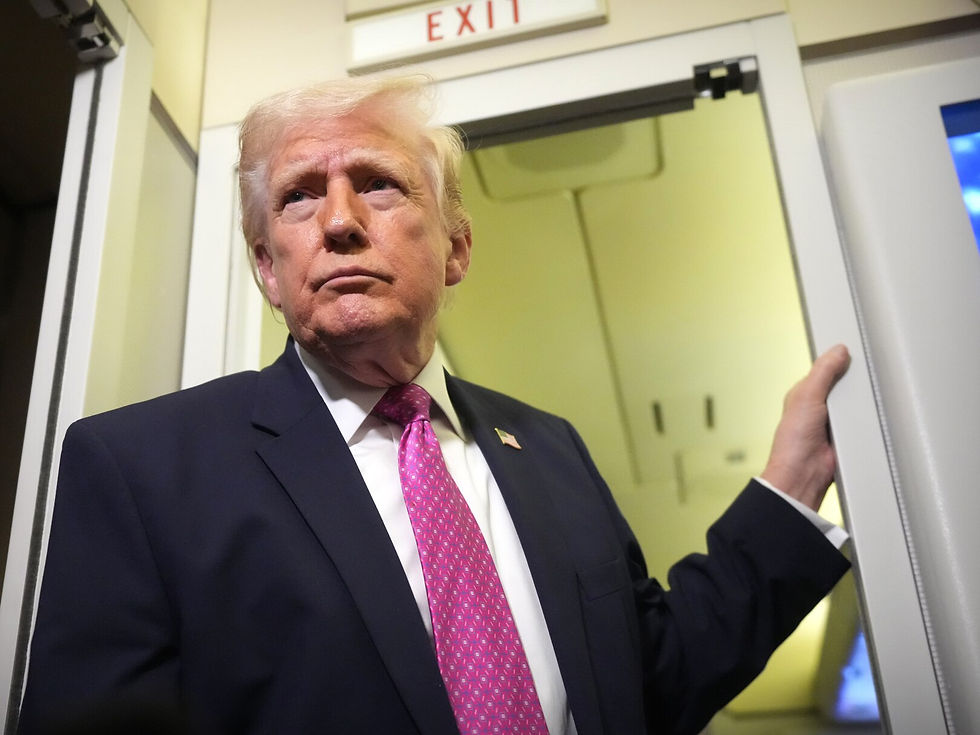
On paper, the choices appear straightforward.
Escalate.
Negotiate.
Wait.
In practice, each option carries risks that extend far beyond the Persian Gulf.
Escalation satisfies those who believe Iran only responds to pressure. Supporters of this approach argue that Tehran has historically used negotiations to buy time while preserving its strategic position. They believe stronger military action, tighter sanctions, and more aggressive deterrence would eventually force concessions that diplomacy alone cannot achieve.
The difficulty is that escalation rarely occurs in isolation.
A broader confrontation could threaten energy markets, unsettle regional allies, disrupt global trade, and increase the risk of unintended conflict involving additional actors. Every missile strike carries the possibility of retaliation. Every retaliation creates pressure for a response and every response increases uncertainty.
The second option appears more attractive at first glance.
Negotiation promises stability.
It offers the possibility of reducing tensions, restoring predictability to energy markets, and creating a framework capable of preventing future crises. Diplomacy also aligns with the interests of many international actors who have grown weary of prolonged confrontation.
Yet negotiations present political risks of their own.
Any agreement would almost certainly require compromise. Compromise inevitably creates critics. Opponents would question whether concessions reward hostile behavior or merely postpone future conflicts. Policymakers therefore face the challenge of pursuing diplomacy while simultaneously appearing strong enough to justify it.
The third option may be the most dangerous precisely because it appears the safest.
Waiting allows immediate tensions to cool. It avoids dramatic decisions and reduces short-term risks. Yet strategic patience is not a neutral position when confronting an adversary that may be equally comfortable playing a long game.
This is where the Iran war the long game becomes particularly significant.
Iranian leaders often frame conflicts through the language of endurance. They have spent decades adapting to overbearing sanctions, diplomatic isolation, and economic restrictions. While these pressures have undoubtedly imposed costs, they have also forged a strategic culture accustomed to prolonged confrontation.
Washington, by contrast, frequently operates within political timelines measured in election cycles, legislative cycles, the wall street and media cycles. Public attention shifts. Priorities evolve. Administrations change. Maintaining strategic focus becomes difficult over extended periods and Iran knows this.
The result is a confrontation in which time itself becomes a factor.
Iran does not necessarily need to achieve decisive victory.
It may simply need to show Washington that the costs of continued pressure exceed the benefits.
This dynamic helps explain why the conflict has moved beyond traditional military calculations. The central question is no longer whether the United States possesses greater power. Few serious observers dispute that reality.
The question is whether power alone can produce the political outcomes Washington seeks.
FTN mapped a similar theme in After Hormuz: How a 40 Day War Revealed the Systemic Limits of American Power, detailing that modern conflicts increasingly expose the gap between military capability and strategic influence. The challenge is not defeating opponents on the battlefield. The challenge is shaping the systems in which those opponents operate.
Iran appears to understand this distinction clearly.
Rather than confronting American power directly, Tehran often seeks to complicate American efforts. By exerting pressure on U.S. allies in the Gulf, creating uncertainty around key maritime routes, strengthening diplomatic and economic ties with China and Russia, adapting to sanctions, and conducting information campaigns across social media and AI-driven platforms, Iran seeks to create an environment in which American power remains formidable but increasingly difficult to apply effectively.
This does not mean Iran holds the stronger position.
It means the conflict to a great extent revolves around leverage rather than force.
President Trump and his officials in the Situation Room therefore face a dilemma familiar to many great powers throughout history. Military superiority provides options, but it does not necessarily provide good options. he greater a nation’s strength, the higher the expectation that it can bend outcomes to its advantage. When those outcomes are not achieved, even great strength can begin to feel constrained.
That constraint has become one of the defining features of the post-ceasefire environment.
The war exposed vulnerabilities in Iran.
The aftermath has exposed uncertainties in Washington.
Both realities can be true simultaneously.
As policymakers keep debating their next moves, another question is gaining weight.
Why has Iran remained so defiant despite decades of pressure, sanctions, isolation, and now direct military confrontation?
The answer lies not only in military strategy, but in how Tehran defines survival, legitimacy, and victory itself.
Why Iran Remains Defiant
To many Western observers, one of the most persistent questions surrounding the conflict is also one of the simplest.
Why has Iran not backed down?
The country has endured decades of sanctions, diplomatic isolation, economic restrictions, cyber operations, covert campaigns, regional confrontations, and now direct military conflict involving some of the most powerful states in the international system. Entire sectors of its economy have been constrained. Its financial networks have faced repeated pressure. Its access to technology, capital, and global markets has been restricted for years.
Yet despite those realities, the Islamic Republic of Iran remains intact.
Understanding why requires looking beyond the battlefield and examining how Tehran interprets power itself.
Western strategic thinking often assumes that pressure produces change. Economic pain, political isolation, and military pressure are expected to gradually alter the calculations of a rival state until concessions become preferable to resistance. That logic has shaped much of Washington's approach toward Iran across multiple administrations.
Iran's leadership often operates from a different assumption.
For Tehran, enduring pressure is not necessarily evidence of failure. In many cases, it is presented as proof of legitimacy. Resistance becomes part of the state's identity. Survival becomes political validation. Every crisis successfully navigated reinforces the argument that the system remains capable of withstanding external attempts to reshape it.
This mindset emerged long before the current conflict.
The Iranian Revolution, the Iran-Iraq War, decades of sanctions, regional proxy confrontations, and repeated disputes with Western powers collectively produced a political culture deeply shaped by the idea of strategic endurance. Many Iranian leaders view history not as a sequence of isolated crises but as a continuous struggle against external pressure.
That perspective influences how Tehran approaches negotiations, military confrontations, and economic challenges alike.
Where Washington often seeks resolution, Iran frequently prioritizes resilience.

This distinction has become clearly visible during the post-ceasefire period. While American officials continue discussing possible frameworks for stabilization, Iranian leaders repeatedly frame the situation through the language of sovereignty, resistance, and strategic patience. The objective is not necessarily to achieve immediate victory. The objective is to avoid strategic defeat.
That approach has allowed Iran to adapt in ways many policymakers once underestimated.
FTN explored this process extensively in The Invisible Blockade: How Superpowers Rule Through Friction, which examines how nations facing prolonged external pressure increasingly reorganize themselves around survival rather than growth. Over time, economies adjust. Trade routes shift. Financial alternatives emerge. New partnerships form. Constraints remain painful, but over time they are absorbed into national planning rather than arriving as sudden disruptions.
Iran's long experience with sanctions illustrates this transformation.
The restrictions imposed by the Western Powers continue to impose enormous economic costs. Inflation, currency instability, and investment shortages remain serious challenges. Yet the state has simultaneously spent years building alternative networks designed to reduce dependence on traditional Western systems. Energy exports now move through complex arrangements. Regional partnerships have expanded. Financial transactions have adapted to operate under conditions that once seemed unsustainable.
This evolution also connects directly to a wider geopolitical transformation taking place far beyond the Middle East.
FTN's earlier analysis Beyond the Dollar: How BRICS Is Rewiring Global Trade and Finance argues that growing efforts to diversify financial systems are gradually reducing the dominance of traditional economic structures that once gave Western powers unparalleled leverage. While the process remains incomplete, the direction is increasingly visible. Countries facing sanctions or geopolitical pressure now possess more incentives than ever to seek alternatives.
Iran has become one of the clearest examples of this shift.

The country's long confrontation with the United States has pushed it toward deeper engagement with emerging multipolar networks involving Russia, China, and other actors seeking greater flexibility within the international system. These relationships do not eliminate Iran's economic problems, but they provide strategic breathing space that complicates attempts at isolation.
The conflict therefore reflects more than a regional dispute.
It intersects with broader questions about the future structure of global power.
This reality was also discussed in The New World Order Is Not Political It Is Systemic: How Energy Data and Trade Form the Real Power Map, which argues that influence emerges from control over interconnected systems rather than traditional political dominance alone. Energy corridors, trade networks, technology platforms, financial infrastructure, and data flows now shape power as much as military alliances.
Iran's strategy reflects an knowledge of this transformation.
Rather than attempting to match American military strength directly, Tehran often focuses on positioning itself within wider strategic systems of influence. Maritime influence, energy leverage, regional partnerships, technological adaptation, and strategic geography become tools capable of compensating for conventional disadvantages.
This helps explain why the country continues emphasizing the Strait of Hormuz despite the enormous risks involved.
Hormuz is not merely a military asset.
It is systemic leverage.
The same principle applies to energy markets. It applies to trade routes. It applies to diplomatic relationships. The objective is not necessarily to dominate these systems. It is to ensure that no major actor can ignore Iran's role within them.
That logic places the conflict within the wider context framed in The U.S. War for Energy Dominance Seeks Control Over China and Europe. The struggle surrounding Iran cannot be understood solely through the lens of bilateral hostility. Energy flows moving through the Persian Gulf affect Europe, China, India, and much of the global economy. Every confrontation involving Hormuz therefore carries implications extending far beyond Tehran and Washington.
Iran understands this reality.
Its leaders recognize that the country's strategic value derives not only from its military capabilities but from its geographic position inside some of the world's most important energy and trade systems. The longer global economies remain dependent on those systems, the more difficult it becomes to fully isolate the Islamic Republic from international decision-making.
This does not mean Iran possesses unlimited leverage.
Far from it.
The country faces enormous internal pressures. Economic hardship remains severe. Infrastructure challenges persist. Public frustration periodically surfaces. Generational expectations continue evolving. None of these realities should be underestimated.
Yet the assumption that pressure alone will inevitably force capitulation increasingly appears flawed.
The post-ceasefire period has demonstrated that Iran remains willing to absorb significant costs in pursuit of strategic objectives it considers essential. That willingness does not guarantee success, but it does complicate any effort to force quick political outcomes.
As a result, the conflict continues drifting toward a deeper contest over systems rather than territory, endurance rather than speed, and leverage rather than outright victory.
Nowhere is that transformation more visible than in the Persian Gulf itself, where maritime routes, naval deployments, energy flows, and commercial shipping have gradually become the true center of gravity in the conflict.
The battlefield that once revolved around missiles is now defined by control of the waters of the Persian Gulf.
The Persian Gulf Has Become the Real Battlefield
The most important battles of the Iran war may no longer be happening where most people are looking.
For much of modern history, wars were understood through visible geography. Armies crossed borders. Aircraft struck targets. Navies fought for control of sea lanes. Territory changed hands. The map itself revealed where power was being contested.
Today's conflicts unfold differently.
The most consequential struggle between Iran and the United States is no longer centered on a specific battlefield. It is concentrated within the systems that keep the global economy functioning. Energy flows, shipping routes, logistics networks, insurance markets, maritime surveillance systems, and digital infrastructure have become as strategically important as military deployments themselves.
The Persian Gulf now sits at the center of that transformation.
Every tanker moving through the region carries more than oil. It carries economic stability, industrial production, financial confidence, and political leverage. Every shipping delay affects markets. Every insurance adjustment changes costs. Every maritime incident sends signals far beyond the waters in which it occurs.
The result is a conflict in which commercial infrastructure increasingly functions as strategic terrain.
This broader reality was revealed in FTN's earlier analysis Strait of Hormuz Crisis: War and the New World Order, which argues that modern power is increasingly exercised through the ability to influence critical systems rather than occupy territory. The article suggested that Hormuz was not simply a chokepoint for energy exports. It was a pressure point capable of influencing global economics, international diplomacy, and geopolitical strategy simultaneously.
The days following the forty-day war have reinforced that conclusion.
Even after the ceasefire, shipping companies continued treating the Gulf as an elevated-risk environment. Maritime insurers reassessed exposure. Security costs increased. Energy traders closely monitored every reported incident. Military patrols remained active. Commercial operators adjusted routes where possible.
The war had revealed something larger than military vulnerability.
It exposed systemic vulnerability.
And that vulnerability extends well beyond Hormuz itself.
In Hormuz, Malacca, Panama: The Chokepoints Accelerating the Global Energy Transition, FTN examines how a small number of maritime corridors continue carrying a disproportionate share of global trade and energy flows. Hormuz connects Middle Eastern energy producers to global markets. Malacca links Asia's manufacturing economies to the wider world. Panama connects major shipping routes across the Americas.
These are not just shipping lanes.
They are the structural arteries of the global economy.

The Iran conflict has demonstrated how quickly disruptions in one location can influence decisions thousands of kilometers away. European energy planners monitor Gulf developments because they affect supply stability. Chinese policymakers monitor the same developments because they affect industrial growth. Financial institutions monitor them because uncertainty directly influences inflation expectations, investment decisions, and commodity markets.
This interconnectedness is gradually changing the nature of strategic competition.
Power now belongs not only to those who control resources but also to those who influence the routes through which those resources move.
That observation sits at the heart of FTN's analysis The New Oil Routes: Navigating the Convergence of War, Tariffs, and Dedollarization. The article argues that geopolitical tensions are steadily reshaping global energy corridors as nations seek alternatives capable of reducing exposure to strategic chokepoints and political risk.
The Iran war is accelerating that process.
Every confrontation involving Hormuz encourages governments and corporations to reconsider existing assumptions about supply security. Every disruption increases interest in alternative routes, diversified suppliers, and new infrastructure investments. The war may not permanently close Hormuz, but it continuously reminds the world why dependence on any single corridor carries risks.
Perhaps nowhere is this transformation more visible than in maritime insurance.
Insurance rarely dominates headlines. Yet insurers now function as some of the most influential actors in global trade because their assessment of risk directly affects the cost of moving goods around the world.
When insurers perceive danger, shipping costs rise.
Higher shipping costs ripple through supply chains.
Those ripples eventually reach entire economies.
FTN examined this phenomenon in The Cost of Risk and How Maritime Insurance Is Rewriting Global Trade Routes, arguing that modern conflicts often influence global commerce long before physical disruptions occur. Perceived risk alone can alter shipping decisions, investment patterns, and trade relationships.
The Persian Gulf crisis illustrates that principle.
A missile does not need to strike a tanker to affect markets.
The possibility that it might can be enough.

This reality also connects to another transformation occurring beneath the surface of the conflict.
The Persian Gulf is no longer merely a maritime space.
It is becoming a data environment.
Satellites continuously monitor vessel movements. Ocean sensors track activity across key waterways. Artificial intelligence systems analyze shipping patterns. Commercial intelligence platforms process enormous volumes of maritime information in real time.
As FTN revealed in The Invisible Infrastructure: How Satellites, Ocean Sensors and AI Are Turning Earth into a Real Time System, The modern world operates within a layer of digital observation that makes strategic activity far more visible than in previous eras.
The implications are profound.
Military deployments can be tracked.
Commercial movements can be analyzed.
Energy flows can be monitored.
Suspicious activity can be detected more quickly.
The Persian Gulf has become one of the world's most heavily surveilled regions, where physical infrastructure and digital infrastructure operate as part of the same strategic ecosystem.
This ecosystem of infrastructure also reinforces themes explored in AI-Driven Deterrence and the Iran–U.S. Stalemate: The New Logic of War. Whereas traditional deterrence relied primarily on visible military power, the emerging model increasingly depends on data, predictive analytics, autonomous systems, and information dominance. In this environment, the ability to observe, anticipate, and interpret activity can be just as valuable as the ability to destroy targets.
That transformation is already underway. The technologies reshaping global commerce are simultaneously reshaping modern conflict. Artificial intelligence systems that optimize logistics can also monitor adversaries. Satellite networks that support international trade can provide strategic awareness. Data streams that guide investors can assist military planners. As these systems become more interconnected, the Persian Gulf finds itself at the center of a new strategic landscape where energy, technology, commerce, and security are converging.
What appears on the surface as a regional confrontation therefore reflects a much larger transformation. The conflict is revealing how modern power operates in an age where energy, trade, technology, data, and security have become inseparable.
The war may still involve ships, missiles, and countless other instruments of conflict, but the underlying reality is becoming clear: the Iran conflict is helping reshape the nature of modern warfare. It is no longer fought solely through military force, but also through algorithms, sensors, networks, and the control of information.
And nowhere does that reality become more evident than at the Strait of Hormuz, a narrow passage of water that continues to hold extraordinary influence over the global economy.
Hormuz Still Holds the World Economy Hostage
For all the rasons surrounding missiles, diplomacy, sanctions, and military deployments, the most important fact of the conflict remains surprisingly simple.
The world is still heavily dependent on a narrow stretch of water that can be disrupted by a relatively small number of actors.
That reality explains why the Strait of Hormuz continues commanding global attention even after the ceasefire.
The significance of Hormuz is often reduced to statistics about oil exports, tanker movements, or shipping volumes. While those figures remain important, they only tell part of the story. Hormuz matters because it sits at the intersection of multiple systems simultaneously. Energy security, international trade, inflation, industrial production, maritime insurance, financial markets, and geopolitical stability all converge within a corridor barely visible on a world map.

A disruption inside Hormuz therefore rarely remains a local event.
It rapidly becomes a global one.
This was one of the central arguments advanced in FTN's earlier analysis The U.S. War for Energy Dominance Seeks Control Over China and Europe. The article argues that energy has never been solely about fuel. It has always been about influence. Nations capable of shaping energy flows possess the ability to affect economic growth, industrial competitiveness, political stability, and strategic decision-making far beyond their borders.
The confrontation involving Iran continues to reflect that broader reality with growing clarity.
The struggle is not simply about military deterrence in the Gulf. It is also about who influences the arteries through which modern civilization moves. Oil may no longer dominate geopolitical discussions in the way it once did, yet the systems built around energy continue underpinning much of the global economy.
This becomes particularly important when viewed through the lens of China.
China's economic rise has depended heavily on stable access to imported energy. A significant portion of those imports travels through maritime routes vulnerable to disruption. Every confrontation involving Hormuz therefore forces Chinese planners to consider not only immediate supply risks but also the long-term security of trade networks supporting the world's second-largest economy.
Europe faces a different version of the same challenge.
The continent's experience following the Ukraine conflict demonstrated how quickly energy insecurity can evolve into inflation, industrial pressure, political uncertainty, and economic strain. European policymakers increasingly recognize that supply diversification is not merely an economic issue. It is a strategic necessity.
This broader context helps explain why the Iran war the long game increasingly intersects with global conversations about trade realignment, energy diversification, and supply-chain resilience.
FTN mapped this transition extensively in Friend-Shoring and the Future of Global Trade Blocs: Geopolitics Rewiring the Global Economy, arguing that governments are increasingly restructuring economic relationships around security considerations rather than efficiency alone. The objective is no longer simply obtaining the lowest cost supplier. It is reducing exposure to geopolitical shocks.
The conflict surrounding Hormuz is accelerating that process.
Every period of instability encourages nations to search for alternative "friendly" suppliers. Every maritime disruption strengthens arguments for regional production. Every shipping risk reinforces efforts to diversify critical supply chains.
The result is a gradual rewiring of the global economy.
Trade patterns shift.
Investment priorities evolve.
Strategic partnerships deepen.
Infrastructure projects gain urgency.
What begins as a regional security concern increasingly influences decisions taking place in boardrooms, ministries, and central banks around the world.
The consequences extend beyond energy.
Modern economies depend on a growing range of critical resources whose movement relies upon stable transportation networks. Rare earth elements, industrial minerals, semiconductors, advanced manufacturing components, and strategic technologies all require secure supply chains. Disruptions affecting one sector spill into sectors.
FTN exposed this dynamic in Rare Earth and the New Resource Wars: How Critical Minerals Are Reshaping Global Power, which advances the view that competition for strategic resources now mirrors earlier struggles over oil. Nations are no longer competing solely for energy security. They are competing for access to the materials underpinning artificial intelligence, advanced manufacturing, renewable energy, telecommunications, and defense systems.
This evolution transforms the meaning of strategic geography.
A chokepoint like Hormuz no longer matters only because oil passes through it. It matters because it sits within a wider network connecting resources, technology, trade, and power.
The conflict also intersects with another transformation unfolding beneath the surface of global finance.
For decades, international energy markets operated within a system heavily influenced by the U.S. dollar. That arrangement reinforced American financial power and provided Washington with significant leverage over international transactions. Yet growing geopolitical fragmentation has encouraged some countries to explore alternatives.
As FTN discussed before in Beyond the Dollar: How BRICS Is Rewiring Global Trade and Finance, efforts to diversify payment systems, expand local currency settlements, and reduce dependence on traditional financial mechanisms are gradually reshaping parts of the global economy.
Iran occupies a particularly important position within this discussion.
Years of sanctions have pushed Tehran toward alternative financial arrangements that many other countries are now studying with growing interest. The objective is not necessarily to replace existing systems overnight. Rather, it is to create options capable of reducing vulnerability during periods of geopolitical tension.
The war has accelerated those conversations.
Every confrontation involving sanctions drives greater interest in alternatives.
Every disruption involving trade routes encourages diversification.
Every geopolitical crisis strengthens arguments for redundancy.
Taken together, these developments reinforce a larger argument advanced in The New World Order Is Not Political It Is Systemic: How Energy, Data and Trade Form the Real Power Map. The article suggestes that power in the twenty-first century emerges from the ability to influence interconnected systems rather than dominate individual territories.
Hormuz illustrates this principle perfectly.
The strait does not derive importance from its size.
It derives importance from the systems flowing through it.
Energy systems.
Trade systems.
Financial systems.
Security systems.
Information systems.
The more interconnected the world becomes, the greater the influence of the chokepoints connecting those systems together.
That reality explains why the ceasefire failed to eliminate global uncertainty.
Military activity may have declined, but the structural vulnerabilities exposed by the conflict remain firmly in place. The world continues depending on maritime routes that can be disrupted. Economies remain sensitive to energy shocks. Supply chains remain vulnerable to geopolitical instability.
In many ways, the most enduring legacy of the fourty-day Iran war may not be the damage inflicted during active fighting.
It may be the realization that the global economy remains more fragile than many policymakers previously assumed.
And nowhere is that fragility more visible than in the growing recognition that time itself may now favour those willing to endure uncertainty longer than their rivals.
The conflict, in other words, is becoming as much a war against time as it is a struggle over territory, energy, and regional dominance.
Iran War The Long Game Is Also a War Against Time
If geography explains where the conflict is unfolding, time explains more how it is being fought.
The post-ceasefire phase of the Iran war has revealed that neither Washington nor Tehran is simply competing for territory, influence, or military advantage. Both sides are competing to shape the future while convincing the other that continued resistance will eventually become unsustainable.
This transforms time itself into a strategic asset.
Throughout modern history, powerful states have often assumed that superior economic resources, military capabilities, and technological advantages would eventually produce political outcomes. In many cases that assumption proved correct. Yet some of the most consequential conflicts of the past century demonstrated that endurance can sometimes rival strength as a source of power.
The United States learned this lesson in Vietnam.
The Soviet Union learned it in Afghanistan.
More recently, the Ukraine conflict has demonstrated how wars that begin with expectations of rapid resolution can evolve into prolonged contests of attrition involving economics, technology, industrial capacity, information, and political will.
FTN explored this dynamic in The Ukraine War Was Never Just About Ukraine: The New World Order, arguing that modern conflicts function as systemic competitions rather than isolated military events. The battlefield becomes only one component of a larger struggle involving energy, technology, trade, finance, diplomacy, and public perception.
The Iran confrontation fits that pattern.
The question is no longer whether either side can inflict damage.
Both have already demonstrated that capability.
The question is whether either side can sustain its position longer than the other without suffering unacceptable costs.
That contest becomes more complicated in an era defined by artificial intelligence.
For decades, deterrence relied primarily on military capabilities. States sought to prevent conflict by demonstrating that aggression would carry unacceptable consequences. Today, deterrence extends beyond military power to include information systems, predictive analytics, autonomous technologies, cyber capabilities, and AI-assisted decision-making.
This transformation was examined in FTN's analysis AI-Driven Deterrence and the Iran–U.S. Stalemate: The New Logic of War, which argues that artificial intelligence is fundamentally altering how states assess risk, monitor adversaries, and project power.
The implications are profound.
Military planners no longer rely solely on traditional intelligence gathering.
AI systems are transforming how information is analyzed, processing satellite imagery, maritime movements, communication patterns, economic indicators, and battlefield data at speeds beyond human capacity alone. This allows risks to be detected sooner, patterns to emerge more clearly, and strategic decision-making to become more informed and responsive.
The more interconnected and observable the world becomes, the more information policymakers must interpret. Signals multiply, competing narratives emerge, and the sheer volume of available data creates challenges of its own.
This reality is now shaping the Iran conflict. Naval movements are tracked in real time, satellite imagery is scrutinized by governments and private analysts alike, diplomatic statements are dissected for strategic meaning, and market reactions become part of the wider geopolitical landscape.
The result is a confrontation unfolding within an ecosystem of constant observation, where actions, perceptions, and information flows can influence events almost as much as military force itself.
FTN examined the wider implications of this transformation in Who Controls AI Controls the Future: Inside the Global Race to Regulate Artificial Intelligence, highlighting how control over information processing may become as strategically important as control over physical resources. Nations that master artificial intelligence gain advantages not only in commerce but also in defense, intelligence, diplomacy, and strategic planning.
The Iran war long game reveals how energy, technology, information, and geopolitics are converging into a single strategic contest.
Conflict is no longer confined to physical space.
It extends into digital space.
Information space.
Economic space.
And into the realm of algorithms.
This convergence is particularly visible in the rapid evolution of autonomous systems.
As explored in Venezuela to Iran: How AI Drones Are Reshaping Global Geopolitics, relatively affordable unmanned technologies are allowing states and non-state actors alike to project influence in ways that previously required vastly greater resources. The monopoly once enjoyed by major military powers is gradually eroding as smaller actors gain access to AI-driven capabilities.
For countries facing conventional disadvantages, this shift matters enormously.
Technology becomes a force multiplier.
Adaptation becomes a strategic necessity.
Innovation becomes a form of deterrence.
Iran has invested heavily in these areas precisely because it understands the asymmetries shaping its confrontation with the United States. While Tehran cannot match Washington ship for ship or aircraft for aircraft, it can seek alternative methods of imposing costs, creating uncertainty, and complicating tactical decision-making.
The information domain reflects a similar pattern.
Modern conflicts extend beyond the battlefield into the realm of perception and narrative. Public opinion influences political decisions, international sentiment shapes diplomatic possibilities, and information campaigns help define how events are interpreted by audiences around the world.
FTN examined this dimension in Iran's AI Propaganda War: Deepfakes, Lego and Anti-Trump Memes, which explores how emerging technologies are transforming influence operations. Artificial intelligence allows content to be created, adapted, translated, and distributed at unprecedented scale. Competing narratives can now spread globally within minutes.
The significance extends far beyond propaganda because information itself has become a form of infrastructure. Control over narratives can influence political momentum, shape public perception, and affect the strategic environment in which decisions are made.
This reality reinforces a broader theme running through many of FTN's recent analyses: the future of power is becoming more systemic in nature. Military capabilities, economic resources, and geography remain fundamental sources of influence, but they no longer operate in isolation. The ability to process information, adapt to technological change, and shape interconnected systems may prove just as decisive in determining which nations thrive and which struggle to maintain their position.
That argument was central to Where AI Will Be in 1, 2, or 3 Years: The Future of Our Civilization, which suggestes that artificial intelligence is rapidly becoming embedded within nearly every major system supporting modern society. Energy networks, financial markets, logistics chains, defense planning, healthcare, education, manufacturing, and governance are all being transformed simultaneously.
The consequences for geopolitics are enormous.
Future conflicts will not simply be fought with AI.
They will to a greater extent be fought through systems shaped by AI.
The Iran and the Ukraine wars present an early glimpse into that reality.
And that transition extends well beyond Washington and Tehran.
It is reshaping strategic decisions in Beijing, Moscow, Brussels, New Delhi, and every major actor attempting to navigate an increasingly multipolar world.
Understanding that larger transformation requires stepping back from the battlefield altogether and examining how the conflict fits into the broader strategic geometry emerging across the international system.
China, Russia and the Multipolar Opportunity
One of the most important consequences of the Iran war may be occurring far beyond the Middle East itself.
While much of the world's attention remains focused on Washington and Tehran, other major powers are quietly studying the conflict for a different reason. They are less interested in who wins individual confrontations than in what the confrontation reveals about the future structure of global power.
For China and Russia, the war represents more than a regional crisis; it opens a rare window of strategic opportunity.
It offers a live case study of the strengths and limitations of the international system that took shape after the Cold War, how it holds under pressure, where it bends, and where it fractures.
In that sense, the conflict becomes less about the battlefield alone and more about observing the shifting architecture of global order in real time.

The United States remains the world’s most influential military, financial, and technological power. Yet the conflict underscores a broader reality that is becoming more visible across multiple regions.
Dominance does not automatically translate into control. Influence does not always produce compliance.
U.S. power remains formidable, but the systems through which it operates are becoming more contested.
This was one of the central ideas advanced in FTN’s analysis, The Ukraine War Was Never Just About Ukraine: The New World Order. The piece outlines how modern conflicts serve as arenas where competing visions of international order collide. The immediate battlefield matters, but the larger struggle concerns how power is organized, distributed, and exercised across the international system.
The Iran conflict reflects that same dynamic.
For Beijing, the confrontation reinforces long-standing concerns regarding energy security and strategic vulnerability. China remains deeply dependent on maritime trade routes connecting its economy to global markets. The Strait of Hormuz represents one of several chokepoints capable of affecting Chinese growth, industrial production, and economic stability.
Every disruption in the Gulf therefore serves as a reminder of a larger strategic challenge.
A nation can possess enormous economic strength while remaining vulnerable to instability occurring thousands of kilometers away.
This reality has encouraged Beijing to accelerate investments in alternative infrastructure, diversified supply chains, strategic reserves, and new trade corridors. Initiatives stretching across Eurasia increasingly reflect a desire to reduce exposure to geopolitical friction concentrated within a handful of critical routes.
The Iran war strengthens those incentives.
Every confrontation involving Hormuz reinforces China's determination to build a more resilient economic architecture.
Russia views the situation through a different lens.
Moscow sees a world gradually moving away from unipolarity toward something more fragmented and competitive. The Kremlin has spent years arguing that power is becoming distributed across multiple centers rather than concentrated within a single dominant bloc.
The persistence of the Iran confrontation appears to support that narrative.
Despite sustained pressure, Iran remains a consequential regional actor.Under extensive sanctions, alternative economic arrangements continue to emerge.And even with efforts at isolation, new partnerships continue to develop.
None of these developments signal the end of American influence.
They do, however, suggest that influence now operates within a more complex environment than in previous decades.
Growing cooperation among emerging powers reflects efforts to build alternatives rather than outright replacements. The objective is not necessarily to dismantle existing systems overnight, but to reduce dependence on them.
The distinction matters.
A multipolar world rarely emerges through sudden transformation.
It takes shape gradually as states accumulate options.
Alternative trade mechanisms.Diversified payment systems.
Parallel supply chains.
Realigning diplomatic ties.
Each individual adjustment may appear modest. Taken together, however, they contribute to a wider redistribution of influence across the international system.
The Iran conflict has accelerated many of these conversations.
Countries observing the war recognize the rising risks associated with excessive dependence on any single route, currency, technology platform, or geopolitical relationship. Strategic flexibility becomes more valuable when uncertainty increases.
This trend is also central to FTN's analysis Friend-Shoring and the Future of Global Trade Blocs: Geopolitics Rewiring the Global Economy, which argues that globalization is not disappearing but reorganizing. Trade networks are becoming more politically conscious. Security considerations increasingly shape economic decisions. Governments are placing greater emphasis on resilience alongside efficiency.
The consequences are visible everywhere.
Manufacturing strategies are changing.
Energy partnerships are evolving.
Investment flows are shifting.
Regional alliances are deepening.
The Iran confrontation did not create these trends.
It accelerated them.
The same pattern appears in energy markets.
As explored in The New Oil Routes: Navigating the Convergence of War, Tariffs, and Dedollarization, geopolitical tensions are steadily reshaping how energy moves around the world. Producers seek new customers. Consumers seek new suppliers. Infrastructure projects once viewed as optional increasingly become strategic priorities.
The war surrounding Hormuz has amplified those pressures.
Every period of instability encourages diversification.
Every disruption strengthens arguments for redundancy.
Every crisis reminds governments that resilience carries value even when it appears less efficient.
Viewed through this lens, the Iran war becomes part of a much larger story.
The conflict is not simply revealing tensions between Tehran and Washington.
It is revealing how the international system itself is adapting to an era of greater competition, technological transformation, and geopolitical fragmentation.
This reality connects directly to another theme running throughout FTN's recent work.
Power is increasingly systemic.
As argued in The New World Order Is Not Political It Is Systemic: How Energy, Data and Trade Form the Real Power Map, influence now emerges from the ability to shape interconnected networks rather than merely control territory.
The Iran conflict offers a case study in that transformation, where a regional war has rippled outward into global systems.
Energy markets across multiple continents have been affected, while maritime incidents have reshaped insurance pricing worldwide. Sanctions debates have accelerated conversations around financial alternatives, and military confrontations have influenced trade decisions stretching from Europe to Asia.
The battlefield may be regional, but the consequences are global.
That reality helps explain why the conflict remains significant even after active fighting has largely subsided. The war is no longer simply about Iran; it is increasingly about how the emerging international system functions under pressure.
And nowhere is that pressure becoming more visible than within the vast technological infrastructure now monitoring, analyzing, and interpreting the world in real time.
The Invisible Infrastructure Watching the Iran War
For most of history, wars were mostly hidden from public view.
Governments relied on scouts, spies, reconnaissance aircraft, intercepted communications, and fragmented intelligence reports to understand what was happening on distant battlefields. Information traveled slowly. Uncertainty was often unavoidable. Entire military campaigns could unfold before decision-makers possessed a complete picture of events.
The Iran war is unfolding under entirely different conditions.
Today, the Persian Gulf exists inside one of the most heavily monitored environments on Earth. Satellites continuously track vessel movements. Commercial sensors monitor maritime activity. Artificial intelligence systems process enormous streams of data in real time. Military planners, intelligence agencies, shipping companies, insurers, commodity traders, and governments now operate within a shared ecosystem of observation.
The result is something unprecedented.
The battlefield has become visible.
This transformation is explored extensively in FTN's analysis The Invisible Infrastructure: How Satellites, Ocean Sensors and AI Are Turning Earth into a Real Time System. The article argues that humanity is gradually constructing a digital layer around the planet capable of monitoring economic activity, environmental conditions, transportation networks, energy flows, and military movements with extraordinary precision.
The Persian Gulf has become one of the clearest demonstrations of that reality.
Every tanker entering Hormuz generates data.
Every naval deployment generates data.
Every change in shipping patterns generates data.
Every unusual movement becomes part of a larger stream of information analyzed by both public and private actors.
The significance of this shift extends far beyond military intelligence.
The same systems that support government monitoring of security risks also enable energy companies to assess supply disruptions, allow financial institutions to evaluate market exposure, help insurers price maritime risk, and assist logistics firms in optimizing routes.
The infrastructure supporting global commerce now overlaps more deeply with the infrastructure supporting strategic competition.
This is a central theme in FTN’s article Smart Seas, Fragile Routes: The Hidden Risk in Tech Driven Maritime and Energy Security. The piece argues that growing reliance on digital systems has made global trade more efficient while simultaneously introducing new vulnerabilities. The same technologies improving visibility can also become targets. The same networks supporting coordination can also become points of disruption.
The Iran conflict highlights this tension.
Greater visibility reduces uncertainty.
It does not eliminate risk.
Indeed, increased access to information can sometimes intensify competition because every actor gains a clearer understanding of what is at stake.
Artificial intelligence is accelerating this process.
AI is increasingly becoming a strategic resource in its own right. Nations capable of processing information faster, identifying patterns earlier, and making decisions more effectively gain advantages extending across military, economic, and political domains.
The ability to interpret reality may become nearly as important as the ability to shape it.
This principle sits at the heart of FTN's analysis AI-Driven Deterrence and the Iran–U.S. Stalemate: The New Logic of War. The article argues that artificial intelligence is gradually transforming deterrence from a purely military concept into a systemic one. States increasingly seek advantages through predictive analytics, autonomous systems, cyber capabilities, and information dominance.
The objective is no longer simply to respond faster, but to anticipate faster.
The Iran confrontation reflects this shift.
Military deployments remain critical, as do naval power and energy security. Yet each now operates within a broader architecture of sensors, satellites, algorithms, and data networks that continuously interpret events as they unfold.
The significance extends beyond the current conflict.
What is emerging in the Persian Gulf today may offer a preview of how future geopolitical competition will operate worldwide. Nations will continue competing for resources, trade routes, and influence, but they will do so within an environment where information moves instantly and observation becomes nearly continuous.
Artificial intelligence is moving beyond individual applications and becoming embedded within the systems that underpin modern life itself, reshaping transportation, finance, logistics, healthcare, governance, defense, and communications at the same time.
The consequences for international politics are profound.
Future power will not depend solely on armies, economies, or natural resources, but on the ability to understand and manage complex systems.
The Iran War: The Long Game illustrates this transition in real time. What began as a regional confrontation now reveals the contours of a wider transformation in how nations compete, cooperate, monitor risks, and exercise influence.
The battlefield still exists, but it is now surrounded by an expanding invisible infrastructure capable of observing much of what occurs within it.
That reality leads to a central conclusion.
The conflict is no longer simply about Iran, the United States, Israel or even the Middle East; it has become a window into the future architecture of global power, where the Middle East remains a defining axis of energy, trade, and strategic influence.
This article is a cornerstone piece with broader FTN editorial coverage exploring the Iran war, global energy systems, artificial intelligence, geopolitical competition, and the evolving architecture of international power.
About the Author

Tinka C. Muhwezi is a media strategist, commentator, and founder of FTN, with over 25 years of experience spanning journalism, broadcasting, documentary production, and digital media strategy. His analysis focuses on the intersection of geopolitics, energy, technology, artificial intelligence, and global trade, exploring the systemic forces that shape international affairs and influence the headlines of our time. Through FTN, he examines how emerging technologies and shifting power structures are transforming the future of nations, markets, and societies.


Comments