
Queen Best Kemigisha: Tooro Succession Crisis Deepens


The succession crisis in Tooro has moved beyond the question of who should become the next Omukama.
It is now raising uncomfortable questions about King Oyo Nyimba Kabamba Iguru Rukidi IV’s family, the alleged existence of a biological son, the late king’s reported will, and the role played by Queen Mother Best Kemigisha in the final years of her son’s life.
With Oyo’s burial scheduled for Saturday, September 12, the kingdom is facing an extraordinary dilemma.
The Babiito Royal Succession Committee has selected Prince Edward Rukidi Kijanangoma as the next Omukama, but Oyo’s mother and sister have rejected that decision, arguing that the late king left a will identifying his biological son as his preferred heir.
The Ugandan government is now holding urgent talks to resolve the dispute before the burial, because Tooro’s traditional rituals require a successor to be in place.
At the centre of the dispute is therefore a question that is both simple and profound: who exactly is Oyo’s son, and why was his existence not publicly known before the king’s death?
That question inevitably brings the focus back to Queen Best Kemigisha.
Queen Best Kemigisha and the unanswered questions
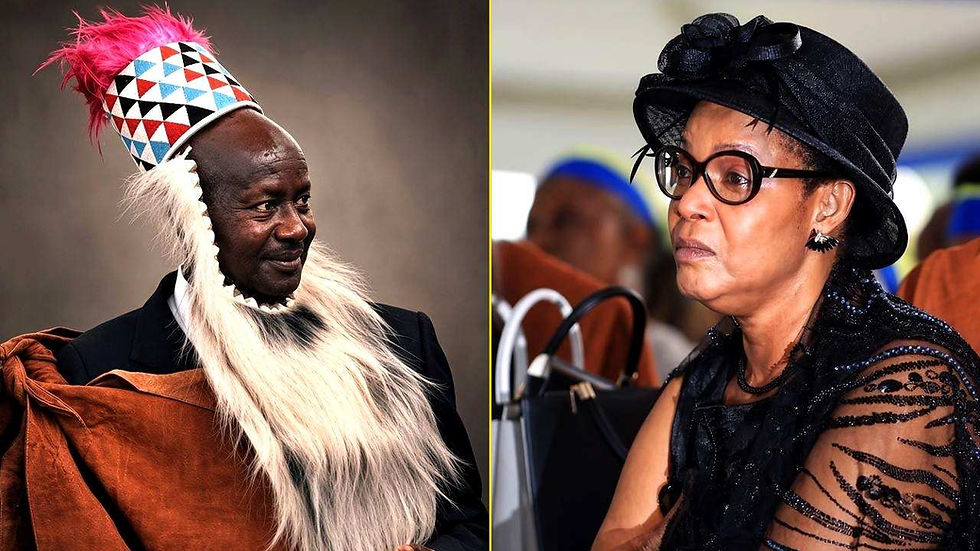
Queen Best Kemigisha is not an outsider to the Tooro throne. She has been one of its central figures for more than three decades.
When her husband, King Patrick Olimi Kaboyo II, died in 1995, their three-year-old son became the Omukama.
Kemigisha subsequently served among the regents who guided the young king until he reached adulthood. Contemporary accounts portray her as a central figure in preserving the stability of the Tooro monarchy, guiding Oyo through his childhood and remaining an influential figure as he grew into adulthood.
That history makes the present dispute particularly significant.
If Oyo had a biological son who was intended to succeed him, why did the existence of that son apparently remain outside public knowledge until after his death?
Tooro elders say that Oyo had never publicly acknowledged a child and had no formally recognised queen. The alleged son is unknown to the public, and questions linger over his identity and his mother.
Those aren't questions that can simply go away.
They are central to determining whether the reported heir exists, whether he is legally and culturally eligible to inherit the throne, and whether Oyo’s alleged will can be authenticated and interpreted according to Tooro custom.

Andrew Mwenda has offered one explanation for why the reported son did not emerge during the succession process.
According to his account, a representative of the Queen Mother presented the boy to the succession committee but allegedly failed to provide a photograph, while the committee received different names for the child and no details about his maternal family.
Mwenda has also said that the Queen Mother did not want information about the child disclosed until the reading of Oyo’s will. These are Mwenda’s claims and remain disputed by the royal family.
That creates another question.
If the alleged son was known to members of Oyo’s immediate family, why was he not introduced to the wider Babiito clan before the succession crisis began?
Why was Oyo’s son not announced?
The issue becomes more striking when compared with what the public already knew about Princess Ruth Komuntale’s child.
In September 2025, The Daily Monitor reported that Queen Best Kemigisha attended the baptism ceremony of Komuntale’s first grandchild at Karuziika Palace and publicly spoke about her happiness at becoming a grandmother. She also used the occasion to urge Oyo to marry and bring an Omugo into the royal family.
That public announcement now provides an important contrast.
The birth of Komuntale’s son was publicly acknowledged. His presence within the royal family was known. Yet the alleged biological son of the reigning king, if he exists as claimed, apparently remained outside public view.
This does not by itself prove that the alleged son does not exist. Nor does it prove that Queen Best Kemigisha concealed anything improperly.
But it creates a legitimate question about how information about royal children was communicated and who was responsible for formally recognising them.
Why did Queen Best Kemigisha publicly celebrate and announce Princess Komuntale’s son, while Oyo’s alleged son remained undisclosed until after the king’s death?
That question deserves an answer based on documents, testimony and royal records rather than speculation.
Dr. Sarah Bireete has argued that the immediate priority should be establishing the facts about Oyo’s children before the kingdom proceeds with an irreversible succession settlement.
“The best solution would be to unveil King Oyo’s children, if they exist and then pursue a known cause. The burial of the King is tomorrow and the next King has cultural functions to perform. Speculation is the main cause of confusion.”— Dr. Bireete Sarah
The argument is significant because it points towards a potentially simple solution to a dispute that is becoming increasingly complicated: establish who the children are, establish what the will actually says, and then allow the relevant cultural and legal authorities to determine succession.
What happened to the royal family around Karuziika?
Another question now entering the debate concerns the relationship between Oyo’s immediate family and Karuziika Palace.
For much of Oyo’s childhood, the palace was central to his identity as king. New Vision describes Karuziika as the place where the young monarch was shaped for kingship, while other historical accounts describe Kemigisha and other regents as guiding him through childhood and adolescence.
But the modern royal family also lived a life that extended beyond the palace.
Princess Ruth Komuntale has lived in the United States, and other members of the wider royal family have spent periods outside Fort Portal. Oyo himself lived in Kampala, travelled abroad for education, treatment and other activities. His final illness was treated first in Germany and later in the United States.
This raises a broader question about the modern Tooro monarchy.
How close was Oyo’s private family life connected to the traditional institutions of Karuziika Palace?
And, more specifically, who within the royal household knew about his alleged son?
Those questions matter because the succession dispute is no longer simply a disagreement between a clan committee and two members of Oyo’s immediate family.
It has become a dispute over who had knowledge of the late king’s personal affairs and who had authority to speak for him after his death.

Andrew Mwenda’s challenge to Queen Best Kemigisha
The most direct public confrontation has come from Andrew Mwenda, a prominent journalist and member of the Tooro royal clan.
Mwenda has rejected Queen Best Kemigisha’s description of the succession committee as a “self-appointed group of clan members.” According to his account, more than 100 Babiito princes and princesses met at Karuziika on August 28 and selected a 21-member Royal Succession Committee headed by the Omusuuga.
His account also introduces details that have intensified questions about the reported son.
Mwenda says the succession committee considered several candidates, including the reported son of Oyo.
He claims that the representative presenting the boy did not provide a photograph and that conflicting names were given.
He also says the committee did not receive information about the boy’s maternal family.
These claims have not settled the matter. Instead, they have created another layer of controversy.
If the boy is genuinely Oyo’s biological son, the central issue is not whether he was photographed for a committee meeting. The central issue is whether his identity, parentage and place within Tooro’s succession traditions can be independently established.
That is why the alleged will has become so important.
What does Oyo’s alleged will actually say?
Queen Best Kemigisha and Princess Ruth Komuntale have maintained that Oyo left a will identifying a biological son as his heir. Reuters has reported that the family says the will dates from 2022.
But Andrew Mwenda has offered a different interpretation, claiming that the document
referred to a hypothetical heir rather than conclusively identifying a specific son. Other reports have presented the royal family’s position that the will clearly establishes the order of succession.
That disagreement should be resolved through the document itself.
The key questions are straightforward.
Was the document genuinely written and signed by King Oyo?
When was it made?
Was it legally witnessed?
Does it name a specific child?
Does it establish that child as successor?
And does the will override, complement or conflict with Tooro’s traditional succession procedures?
Until those questions are answered, both sides can continue interpreting the document in ways that support their preferred outcome.

Could the Omusuuga become a temporary king or regent?
There may, however, still be a way for Tooro to prevent the burial of its late king from becoming a flashpoint in an already deepening succession crisis.
The possibility of the Omusuuga serving as a temporary king or regent could allow Tooro to complete the funeral and fulfil its traditional obligations while giving the competing claims time to be carefully examined and resolved.
The burial is scheduled for Saturday, yet the kingdom has not reached consensus over the next Omukama.
The Uganda government mediation is now focused on finding a way through the impasse before the funeral.
A regency would not necessarily answer the ultimate question of succession. It could instead create breathing space.
The Omusuuga could perform the immediate cultural functions required of a successor while the royal family, Babiito elders and relevant legal authorities establish the facts surrounding Oyo’s alleged son and the reported will.
That would also address one of the concerns raised by Dr Sarah Bireete: that the burial should not be overtaken by emotion when the facts can potentially be established.
The succession dispute did not begin with Kijanangoma
FTN has been following the succession dispute as it has developed.
In Princess Ruth Komuntale Disputes Tooro New King Announcement, FTN examined Komuntale’s rejection of the announcement of a new Omukama and the argument that Oyo’s wishes should be respected.
That dispute is significant because it established that the disagreement was not merely about personalities.
Komuntale was challenging the process through which the next king had been selected and pointing instead to the late king’s reported wishes.
The story also sits within a much longer history of contested authority in Tooro. The kingdom has experienced succession disputes, royal power struggles and violent episodes involving members of the royal family and the state. The 1999 killing of Prince Charles “Happy” Kijanangoma remains one of the darkest episodes associated with the modern Tooro throne.
The current crisis therefore has a historical memory behind it. It is not simply a disagreement created by Oyo’s death.

Oyo’s death has reopened an older story
FTN’s earlier report, King Oyo’s Death: The Dark Tale of Tooro’s Ancient Crown, examined how Oyo’s death has also brought an old and darker story of Tooro back into focus.
The legend of Nyinamwiru, a royal woman whose tragic fate is deeply woven into the mythology of the Babiito, speaks of a kingdom in which the struggle for the throne could carry consequences far beyond the palace.
Her story has survived for generations, becoming part of the darker folklore surrounding Tooro’s ancient crown.
That legend has gained a strange resonance as the kingdom confronts another death and another succession struggle.
Some past Tooro kings have also died under circumstances that later acquired an air of mystery, adding to the sense that the crown carries a history that is not easily separated from tragedy, power and intrigue.
Oyo’s death does not prove any connection to those old stories. But it has reopened the question of why the Tooro throne has for generations carried such a powerful and sometimes unsettling mythology.
A succession crisis with no easy winner
FTN’s latest report, Tooro Kingdom Succession Crisis Deepens as Oyo’s Heir Remains Disputed, documented how questions over Oyo’s reported son, the Omusuuga and the timing of the appointment of a new king pushed Tooro into an unprecedented succession crisis.
The latest developments make the situation even more difficult.
On one side stands the Babiito succession process and its selection of Kijanangoma.
On the other stands Oyo’s mother and sister, who insist that the late king’s wishes must be respected.
Between them stands an alleged biological son whose identity and eligibility remain contested.
And above the entire dispute hangs a reported will whose interpretation has become central to the future of the throne.
The question Queen Best Kemigisha cannot avoid
None of this should obscure the fact that Queen Best Kemigisha is a grieving mother who has lost the son she helped raise from childhood into one of Uganda’s most recognisable traditional leaders.
Recent reporting has emphasised that personal history. The Independent described Kemigisha as a mother who first buried her husband, then lost her young daughter, and has now lost her son. New Vision likewise recalled her role as Oyo’s guardian and regent during his childhood.
But grief and public responsibility can exist at the same time.
As Queen Mother, Kemigisha is also one of the principal figures in a succession dispute that could determine the future direction of the Tooro monarchy.
That makes the unanswered questions unavoidable.
Why was Oyo’s alleged son not publicly known?
Who knew about him?
Why was Princess Komuntale’s son publicly acknowledged while Oyo’s alleged son was not?
What exactly does the reported will say?
Who is the boy’s mother?
And can his identity and relationship with the late king be independently established?
There is another question that is perhaps even more important.
Can Tooro create enough space for the truth to emerge before choosing a king who may divide the kingdom further?
About the Author

Tinka C. Muhwezi is the Editor-in-Chief and Producer at Frontier Tech Network (FTN), a media and technology platform covering world news, science, technology, innovation and emerging trends.
With over 25 years of experience in science journalism, broadcasting, storytelling, video production and digital media strategy, he brings a multidisciplinary perspective to global developments.
Tinka C. Muhwezi has also taught mass communication, multimedia video and photography at universities and has worked across journalism, media production, digital security and technology.
Through FTN, he combines journalism, research and visual storytelling to examine major geopolitical, technological and social developments shaping the modern world.


Comments