
U.S. Bombs Iran During Khamenei Funeral: Trump's Long Game


After days of extraordinary scenes in Tehran, where hundreds of thousands of mourners lined the streets beneath black flags and Qur'anic recitations to bid farewell to Ayatollah Ali Khamenei, the late Supreme Leader's body was making its final journey through the holy cities of Iraq.
Religious scholars, political leaders, military commanders and pilgrims from across the Islamic world had gathered to honour one of the Middle East's most influential and controversial statesmen, bringing to a close a chapter that had shaped Iran's political identity for more than three decades.
Then, before the mourning had ended, another chapter of the conflict began.
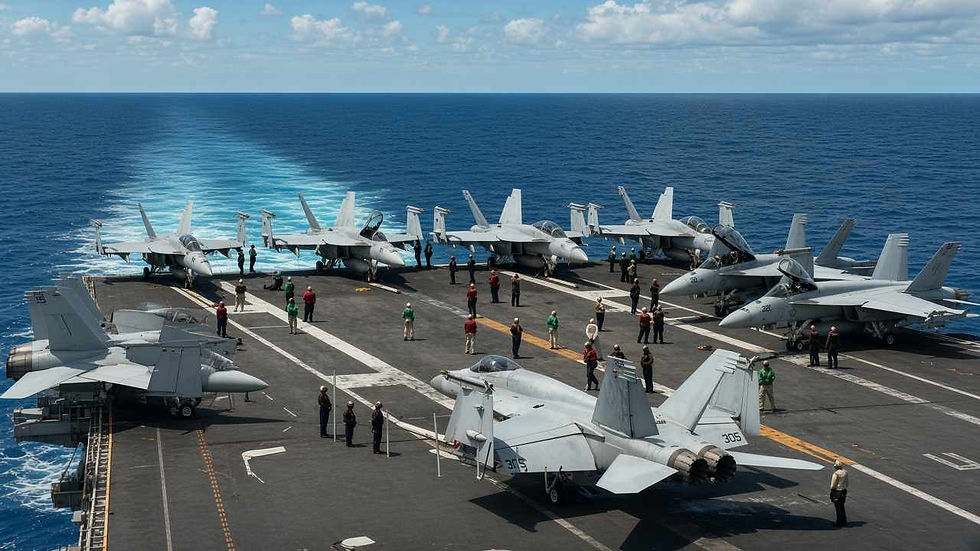
As funeral ceremonies continued in Iraq, the United States launched a new wave of military strikes across Iran, targeting what Washington described as missile facilities, drone infrastructure, radar installations, coastal defence systems and military sites linked to threats against commercial shipping in the Strait of Hormuz.
The timing transformed what had been a period of national mourning into another defining moment in a conflict that has repeatedly blurred the line between diplomacy and war.
The headline "U.S. Bombs Iran During Khamenei Funeral" immediately reverberated across international media.
First and foremost, the attack was widely condemned as an unprecedented breach of basic humanity, completely violating the universal right to mourn. Striking a nation and a grieving family during a funeral, a time when peace, respect for the deceased, and a period of national mourning were desperately needed, was viewed globally as an unheard-of atrocity.
Beyond the sheer cruelty of the timing, the strike also completely shattered ongoing, public diplomatic negotiations that were still actively being discussed between Washington and Tehran.
Only days earlier, President Donald Trump had spoken optimistically about progress in Doha, suggesting that discussions surrounding Iran's nuclear programme and broader regional security were moving in a positive direction.
Yet even as diplomacy appeared to remain alive, American bombers were once again striking Iranian territory.
The contradiction immediately became impossible to ignore.
Was Washington still pursuing peace?
Or had negotiations become another instrument in what appears to be Trump's broader long game in the Middle East?
The question carries significance far beyond the latest exchange of missiles.
Nearly two months after the guns were supposed to fall silent, the Iran crisis continues to evolve into exactly what FTN described in Iran War: The Long Game for Middle East Dominance—a prolonged geopolitical contest in which diplomacy, military operations, sanctions, maritime security and economic pressure increasingly function together rather than separately.
Each new round of negotiations is accompanied by renewed military deployments.
Every declaration of progress is followed by fresh uncertainty. The battlefield has expanded beyond cities and military bases to include energy markets, commercial shipping, insurance premiums and global investor confidence.
That reality was reinforced only hours after the strikes, when Trump defended the operation while insisting that diplomacy remained possible.
"They called a little while ago. They want to make a deal so badly. I just don't know if they're worth making a deal with. I don't know that they are going to honour the deal. That's the problem." — President Donald Trump
Those remarks immediately raised another question.
If both sides are still talking, why is the war still expanding?
The latest strikes suggest that assessment remains highly relevant.
Rather than marking the collapse of diplomacy, military pressure appears to be functioning alongside negotiations as Washington attempts to maintain leverage over Tehran while avoiding a wider regional war.
The same dual-track approach became evident in remarks delivered by U.S. Defence Secretary Pete Hegseth, who explained that the latest operation focused on capabilities the Pentagon believed threatened international shipping through one of the world's most important maritime corridors.
"Underground facilities where they were storing drones or missiles, coastal defence sites, radar sites, surveillance sites—anything used to harass shipping in the Strait of Hormuz." — Pete Hegseth
He added that the strikes targeted facilities the United States believed Iran had rebuilt following previous operations.
"Anything they thought they had rebuilt or capability they were using was a target last night." — Pete Hegseth
Those comments immediately shift the focus beyond Iran itself.
The operation was not framed solely around retaliation.
It was also presented as an effort to secure the Strait of Hormuz—a waterway through which a significant share of the world's seaborne oil exports continues to pass.
That strategic connection explains why recent events cannot be understood solely through the lens of military operations.
As FTN examined in Strait of Hormuz Oil Flow Nears Pre-War Levels, commercial shipping had only recently begun returning towards pre-war levels following the implementation of the US-Iran framework agreement.
Although maritime traffic had improved, confidence remained fragile, with insurers, shipping companies and energy traders continuing to price geopolitical risk into every voyage through the Gulf.
The latest strikes threaten to reverse some of those gains.
They also reinforce another recurring theme throughout FTN's coverage of the conflict: the struggle over Iran is no longer defined solely by missiles, drones or military deployments. The struggle continues to revolve around the security of energy corridors, maritime trade, financial confidence and the broader architecture supporting the global economy.
As mourners continued gathering in Tehran, governments from Washington and Moscow to Beijing and the Gulf capitals were already assessing the implications of another dramatic escalation.
The funeral of Ayatollah Ali Khamenei was meant to close one chapter of Iranian history.
Instead, it may have opened an entirely new one.
The central question now is no longer only whether Iran can withstand American pressure. It is whether Washington believes time itself has become a weapon.
The events leading up to Khamenei’s death revealed a pattern increasingly associated with Donald Trump’s approach to foreign policy: maximum pressure, unpredictable escalation, and the use of uncertainty as a strategic tool.
The administration’s actions followed a familiar rhythm of confrontation and negotiation, with public statements about peace and diplomacy occurring alongside military preparations and sudden shifts in posture.
During the period of back-and-forth messages between Washington and Tehran, global markets watched every statement closely. Hopes of de-escalation helped calm fears over energy supplies, regional instability and the wider economic consequences of a prolonged conflict. Yet behind the diplomatic signals, the possibility of military action remained.
The surprise nature of the U.S. strikes amid discussions that suggested a possible diplomatic pathway raised questions about whether negotiations were being used as an opening for compromise or as part of a broader pressure strategy.
The killing of Iran’s supreme leader during this tense period transformed what had been a military confrontation into a historic leadership crisis.
For Trump, this approach reflects a broader doctrine built around unpredictability: creating uncertainty, applying overwhelming pressure, and forcing adversaries to make decisions under extreme conditions.
Supporters argue that such tactics strengthen America’s negotiating position by keeping opponents off balance. Critics argue that they risk closing diplomatic windows and pushing conflicts beyond control.
The central question now is whether this was simply another calculated move in Trump’s unconventional playbook, using unpredictability and pressure to keep the IRGC off balance while forcing Tehran into a weaker negotiating position.
Is Trump pulling off a long game on Iran?

Comments